
10 Best Coal Mine Fans for Underground Mining?

Choosing the 10 Best Coal Mine Fans for Underground Mining requires more than comparing airflow figures. Underground workings change constantly. Tunnels extend, equipment moves, and heat can build near active faces. A fan that performs well in a test facility may struggle in a narrow heading filled with dust, bends, and long duct runs.

This guide examines Coal Mine Fans through practical mining requirements. We consider airflow capacity, static pressure, motor efficiency, noise, vibration, maintenance access, and construction quality. Explosion-protected designs and suitable ventilation controls also deserve close attention. However, no fan can replace a properly engineered ventilation plan or competent site supervision. Real conditions matter.

We also look at axial and centrifugal configurations, portable auxiliary fans, and systems designed for demanding underground environments. Details such as blade material, bearing protection, duct compatibility, and emergency response features can influence daily performance. A sturdy housing is useful, but poor installation may still create dangerous leakage. That point is easy to overlook.

Manufacturer specifications provide a starting point, not the complete answer. Independent testing, maintenance records, and feedback from experienced ventilation engineers offer stronger evidence. Local mine conditions and applicable safety requirements must guide the final decision. Some rankings may remain subjective because mines rarely share identical layouts. The “best” option is often the one that delivers stable airflow, reliable operation, and manageable maintenance over time. Careful selection protects workers and supports productive underground operations.
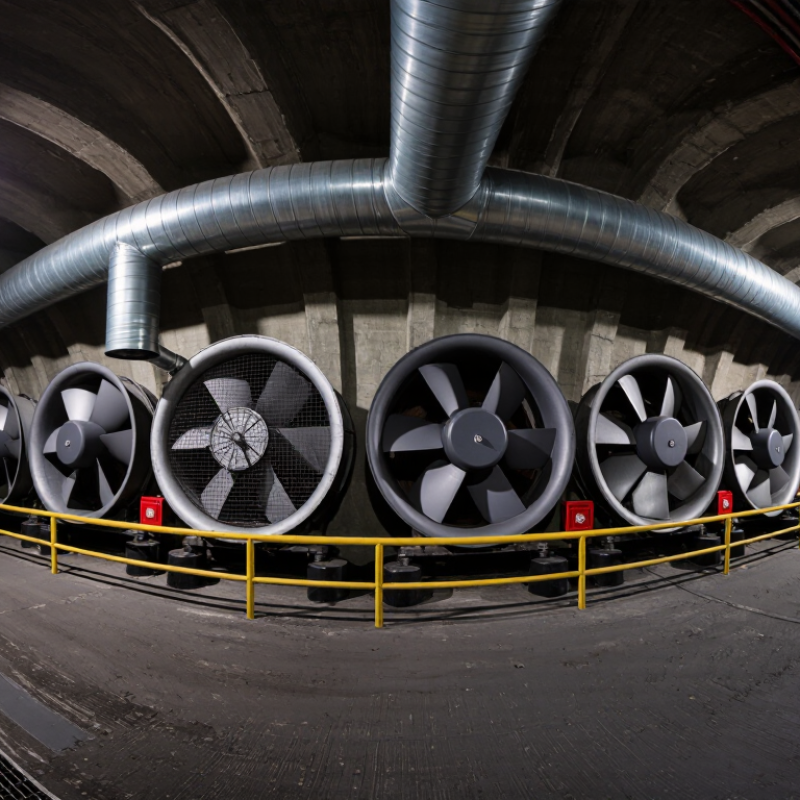
10 Best Coal Mine Fans for Underground Mining?

What Coal Mine Fans Are and Why Underground Mines Need Them

Coal mine fans are essential ventilation equipment for underground mining. They move fresh air through shafts, tunnels, and working faces. This airflow dilutes methane, coal dust, diesel fumes, and heat. It also carries oxygen to workers and helps maintain safer breathing conditions.

A reliable fan system must match the mine’s layout, depth, airflow demand, and monitoring plan. Main fans support overall ventilation, while auxiliary fans direct air into advancing headings. Engineers should check pressure, airflow volume, noise, vibration, and power use during regular inspections.

In practice, small installation errors can create dead zones where contaminants collect. That detail is easy to underestimate. Fan selection should follow professional ventilation studies and applicable safety requirements, not price alone.

Tips:

  • Confirm airflow with calibrated instruments.
  • Inspect blades, guards, motors, and electrical connections.
  • Keep records of unusual vibration or temperature changes.
  • Emergency plans should explain how workers respond to fan failure.

Mine conditions can change quickly, so ventilation controls need frequent review. Even experienced teams can miss developing problems when inspections become routine. Independent testing and competent supervision provide useful protection against that weakness.

Key Performance Factors for Selecting a Coal Mine Fan

10 Best Coal Mine Fans for Underground Mining?

Key Performance Factors for Selecting a Coal Mine Fan

In underground mining, fan selection must match the ventilation network, not just the catalog airflow. Measure required air volume, static pressure, resistance, and leakage across the entire system. A fan may deliver impressive airflow at low resistance, yet underperform in deep workings. Measure both. Review the fan curve at expected operating points, including seasonal and production changes. Efficient motors can reduce energy use, but efficiency alone does not prove suitability. Dust changes everything. Select robust housings, protected electrical systems, and materials suited to humid, abrasive conditions. Noise and vibration also matter because they affect nearby workers and maintenance teams.

Safety performance deserves documented attention. Confirm that the fan supports the mine’s ventilation plan and applicable certification requirements. Check start-up behavior, emergency operation, bearing temperature, and overload protection. Practical inspections should include vibration readings, belt alignment, impeller clearance, and unusual sound. Keep records. Reliable maintenance access can matter more than a small efficiency gain. Variable-speed control may improve response, but poor calibration can create unstable airflow. That risk is easy to underestimate. I would not choose a fan from brochure figures alone; independent testing and site measurements are stronger evidence. A technically correct selection can still fail if operators lack training, spare parts, or a realistic inspection schedule. Recheck assumptions after roadway extensions, equipment changes, and dust accumulation.

The Main Types of Fans Used in Underground Mining

Underground mining depends on carefully selected fans, not a simple “top ten” list. The main fan types serve different ventilation duties. Axial-flow fans move large air volumes through relatively low pressure. Their compact shape suits surface installations and long operating periods. Centrifugal fans create higher pressure and handle resistance from shafts, stoppings, bends, and dense duct systems. They are often chosen when the mine network demands stronger pressure control.

Auxiliary fans work closer to the active face. A forcing fan pushes fresh air through flexible ducting toward workers and cutting equipment. An exhausting fan pulls contaminated air away from the face. Mixed systems can improve dust removal, but poor duct placement may recirculate methane or fine coal dust. That mistake is easy to miss.

Booster fans support airflow in selected underground districts. However, they require careful network studies, interlocks, and continuous monitoring. A poorly positioned booster can reduce airflow elsewhere. Jet fans may assist local air movement, although their usefulness depends heavily on roadway geometry and pressure balance.

In practice, fan selection considers airflow, static pressure, motor efficiency, noise, vibration, fire resistance, and maintenance access. Instruments should track pressure, temperature, gas levels, and fan performance. Operators also inspect blades, bearings, seals, and duct connections. A fan can appear healthy while a damaged duct wastes much of its output. Field conditions change, so designs need regular review rather than blind reliance on the original calculation.

Ten Leading Coal Mine Fan Options and Their Applications

10 Best Coal Mine Fans for Underground Mining?

Ten Leading Coal Mine Fan Options and Their Applications

Coal output remains enormous. The IEA Coal 2023 report estimated global production reached about 8.7 billion tonnes in 2023. That scale demands ventilation equipment matched to mine geometry, methane controls, and emergency planning. The ten leading options are axial main fans for high-volume intake or exhaust; centrifugal fans for higher static pressure; mixed-flow fans for balanced duties; auxiliary fans for advancing headings; forcing fans for fresh-air delivery; exhausting fans for contaminated-air removal; booster fans for distant districts; reversible fans for evacuation changes; explosion-protected fans for hazardous zones; and portable fans for temporary excavation work.

Selection should begin with measured airflow, resistance, leakage, and gas-monitoring data. MSHA ventilation requirements emphasize adequate air movement and methane control, while NIOSH research repeatedly links ventilation performance with face airflow and system resistance. A centrifugal unit may suit a deep shaft with rising pressure losses. An axial unit often fits a large surface airway. In a narrow heading, a flexible duct and auxiliary fan can push air around the last bend, although duct leakage can quietly erase the calculated benefit.

Field experience matters. Operators should inspect impellers, bearings, guards, vibration, and emergency power connections. Fan curves must be checked against real mine conditions, not only catalogue points. Reversible systems sound ideal, but reversal time and dust movement need testing underground. I would also question any design using one fan duty assumption for every shift; mining conditions change, sometimes faster than the spreadsheet.

10 Best Coal Mine Fans for Underground Mining

Typical airflow capacity of ten underground coal-mine fan configurations. Values are representative planning figures; actual selection depends on mine layout, resistance, gas-control requirements, ducting, and statutory ventilation rules.

How to read the chart: Main ventilation systems generally require the highest airflow, while auxiliary, development, drilling, and spot-cooling fans serve localized working areas. The plotted value is the midpoint of a typical engineering range, shown in the tooltip.

How to Compare Safety, Efficiency, Maintenance, and Cost

10 Best Coal Mine Fans for Underground Mining?

When comparing ten underground mine fans, safety must lead every calculation. Check certification for the mine’s jurisdiction and the intended hazardous environment. Confirm airflow, pressure, and temperature limits under real operating conditions. A fan that performs well underground should maintain stable ventilation during changing resistance. Do not trust catalog airflow alone. Measure performance against the mine’s ventilation plan, gas-monitoring system, and emergency procedures.

Efficiency depends on more than motor rating. Review power consumption at normal and peak airflow. Variable-speed control can reduce wasted energy, but poor settings may create unstable airflow. Maintenance details matter. Ask about bearing access, vibration monitoring, spare parts, and service intervals. Inspect the housing, guards, cables, and mounting points during scheduled shutdowns. Small defects become expensive underground.

Cost should include installation, electricity, repairs, downtime, and replacement parts. A cheaper purchase price may hide higher energy use or difficult maintenance. Compare the estimated lifetime cost over several production years. I would also record noise levels and dust exposure near the fan, because operators experience these conditions daily. One practical weakness remains: forecasts cannot perfectly predict rock movement, water, or changing duct resistance. Build a review point into the maintenance plan, and revise fan settings when field measurements disagree with the original design.

10 Best Coal Mine Fans for Underground Mining? — How to Compare Safety, Efficiency, Maintenance, and Cost

Rank Generic Fan Configuration Typical Underground Use Fan Type Airflow Range Static Pressure Range Motor Range Energy Efficiency Safety Characteristics Maintenance Profile Indicative Capital Cost Overall Suitability
1 High-Capacity Main Fan Primary ventilation for large underground production areas Axial, fixed-pitch or adjustable-pitch 150,000–500,000 cfm 1,500–4,500 Pa 250–1,000 kW High
Best when selected near its duty point and controlled with a VFD
Reversible airflow; emergency stop; vibration monitoring; methane-compatible electrical equipment where required Inspect bearings and blades monthly; vibration analysis every 3–6 months; overhaul commonly every 5–10 years US$250,000–900,000 Excellent for large mines requiring dependable continuous airflow
2 High-Pressure Main Fan Deep mines and systems with long airways or high resistance Centrifugal, backward-curved blade 100,000–400,000 cfm 3,000–8,000 Pa 315–1,250 kW High
Strong pressure stability over a broad operating range
Robust casing; guarded rotating parts; inlet protection; pressure and temperature monitoring Periodic impeller inspection; bearing lubrication; alignment checks; internal cleaning where dust loading is high US$350,000–1,200,000 Excellent where system resistance is high and stable pressure is critical
3 Variable-Speed Axial Fan Main or booster ventilation with changing production demand Axial, VFD-controlled 80,000–350,000 cfm 1,200–4,000 Pa 160–800 kW Very high
Airflow can be matched to shifts and working districts
Soft starting; remote monitoring; overspeed protection; reversible operation available on suitable designs Lower mechanical wear from soft starts; routine electrical and vibration inspections remain essential US$220,000–850,000 Excellent for reducing energy use during variable operating conditions
4 Twin-Fan Duty/Standby Station Critical primary ventilation requiring redundancy Paired axial or centrifugal fans 120,000–450,000 cfm 1,500–6,000 Pa 2 × 200–900 kW High
Efficiency depends on whether one or both fans operate
Automatic changeover; independent isolation; emergency power compatibility; continuous condition monitoring Two fan trains increase inspection workload but permit maintenance without total ventilation loss US$500,000–1,600,000 Excellent where ventilation continuity and fault tolerance are priorities
5 Reversible Auxiliary Fan Development headings, headings, crosscuts, and temporary ventilation Axial, reversible 10,000–80,000 cfm 500–2,500 Pa 15–160 kW Medium–High
Good performance when duct diameter and length are correctly matched
Reversible airflow; guarded impeller; local isolation; suitable electrical protection for the mine classification Inspect flexible connections, blades, guards, and bearings frequently because of relocation and handling US$25,000–180,000 Very good for flexible face ventilation and changing mine layouts
6 Explosion-Protected Auxiliary Fan Gassy headings and areas requiring certified electrical equipment Axial, enclosed motor arrangement 8,000–60,000 cfm 400–2,000 Pa 11–132 kW Medium
Safety certification and robust construction may increase electrical losses
Certified flame-resistant or explosion-protected components where mandated; grounding; overload and earth-leakage protection Electrical inspection and certification checks are essential; damaged housings or cables require immediate attention US$35,000–220,000 Very good for hazardous areas when approved for the local mining regulations
7 Low-Noise Auxiliary Fan Work areas near operators, workshops, and sensitive underground zones Axial with acoustic treatment 8,000–50,000 cfm 350–1,800 Pa 11–110 kW Medium–High
Efficient motor and aerodynamic blades reduce operating losses
Acoustic enclosure or silencer; guarded rotor; temperature and vibration sensors Silencer and acoustic lining require periodic cleaning; standard bearing and blade checks apply US$30,000–190,000 Very good where worker exposure to fan noise must be minimized
8 Portable Skid-Mounted Fan Temporary ventilation, construction, recovery, and emergency applications Compact axial 5,000–40,000 cfm 250–1,500 Pa 7.5–75 kW Medium
Simple to deploy, but flexible duct leakage can reduce system efficiency
Skid protection; lifting points; cable protection; emergency stop; grounding and overload protection Frequent checks for transport damage, duct leakage, loose fasteners, and cable condition US$15,000–120,000 Good when mobility and rapid installation matter more than maximum capacity
9 Energy-Saving Booster Fan Localized pressure support in long or complex ventilation circuits Axial or mixed-flow, VFD-controlled 30,000–180,000 cfm 800–3,500 Pa 55–400 kW High
VFD control helps avoid throttling losses at partial load
Interlocks to prevent unsafe pressure interactions; airflow, pressure, and gas monitoring integration Requires regular system balancing; inspect controls, sensors, bearings, and duct connections US$100,000–450,000 Very good for targeted airflow improvement without replacing the complete main fan system
10 Corrosion- and Dust-Resistant Fan Wet, abrasive, saline, or high-dust underground environments Heavy-duty axial or centrifugal 20,000–150,000 cfm 700–3,000 Pa 45–315 kW Medium–High
Durable materials preserve performance in harsh conditions
Protective coatings; sealed bearings; abrasion-resistant blades; drainage and inspection access Cleaning frequency depends on dust loading; inspect coating, impeller balance, and corrosion regularly US$80,000–380,000 Good where environmental durability lowers long-term replacement and repair costs

Comparison note: The figures are indicative engineering ranges for generic underground mine ventilation configurations, not manufacturer-specific ratings. Actual selection must be based on a mine ventilation survey, system resistance calculations, gas classification, applicable electrical approvals, emergency procedures, and local mining regulations. Capital costs exclude major civil works, power distribution upgrades, ducting, installation, and commissioning.

Article Source: