

Smart Beds and Surfaces
Smart solutions can help you recognize changing patient conditions and intervene early. Elevate your patient care with smart bed technology from Centrella Smart+ Hospital Bed, Progressa+ Bed, Envella Air Fluidized Therapy Bed and more. Using smart hospital beds in your facility can enable patient recovery, improve caregiver response time and heighten patient safety.
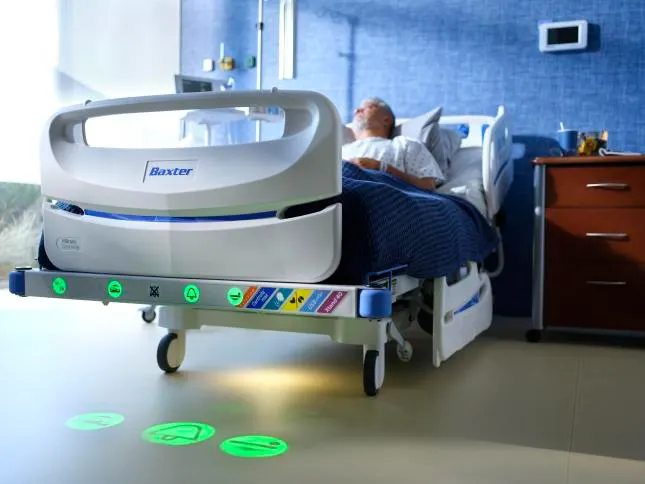
Featured Smart Bed Products


Visit our U.S. Catalog for all available products, parts and accessories.
Reduce the prevalence of pressure injuries and overall cost of care
Pressure injuries can be prevalent and costly. Studies have shown that skin can be compromised in as little as 15 minutes after exposure to moisture. 8,9
How you can support pressure injury prevention
Surface selection is an integral component of pressure injury treatment and prevention strategies. Choosing the right surface for your patient can support the management of heat, moisture, pressure, shear and friction, which are the leading causes of pressure injuries.
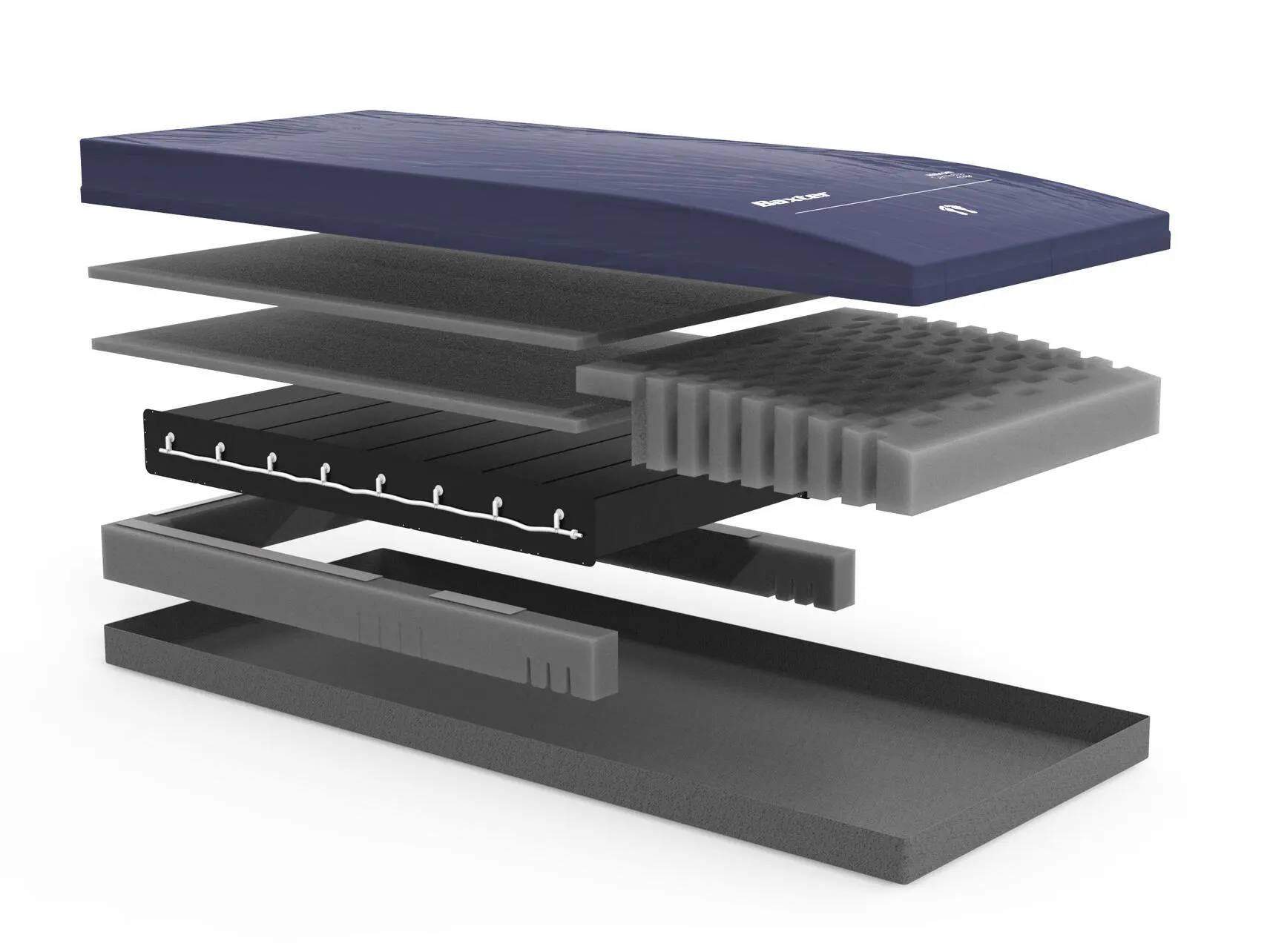
For Better Pressure Injury Prevention, Rethink Your Surfaces
We offer a portfolio of innovative technology to deliver superior pressure and moisture management for optimal healing and prevention, designed and validated using S3i testing standards.
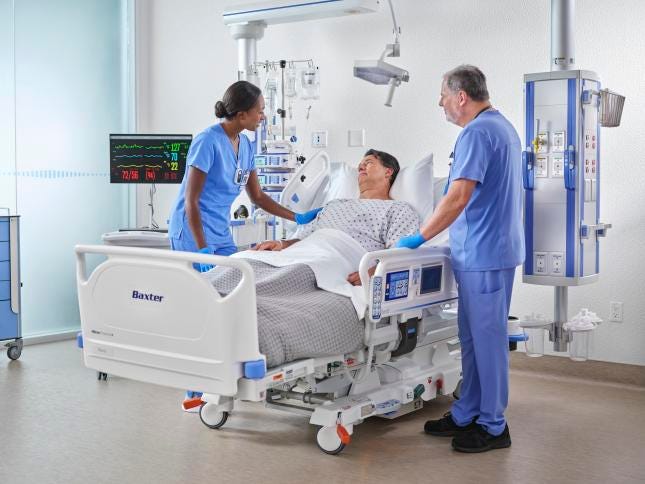
The challenge of early recognition of patient deterioration has been a persistent issue and a lingering patient safety concern.
Signs can appear earlier than you may think: Six to eight hours before a critical event occurs, warning signs can often be identified.1
To help detect deterioration early, accurate capture of vital signs including heart rate and respiratory rate is critical, yet Q4 and even Q2 vitals can be difficult to manage.
Heart Rate and Respiratory Rate are Leading Indicators of Patient Deterioration.3
Respiratory rate—a leading indicator of patient deterioration—is the least often recorded and most omitted vital sign. 3,4

The Importance of Continuous Monitoring
Monitoring solutions like telemetry may not accurately capture respiratory rate, which is a leading indicator of deterioration.2,3
Using early warning scores helps you know when patients are deteriorating, but these scores are only as good as their inputs. Inaccurate vital sign inputs, like for respiratory rate, can make early warning scores less dependable.
Switch from Subjective to Objective
What if all your Med-Surg patients could have their heart rate and respiratory rate continuously monitored just by lying in bed?
72%
Respiratory rates recorded by nurses as either 18 or 20 bpm, whereas only 13% measured by trained observers had these values.5
8%
increase in mortality for every hour treatment is delayed.6
Reduced Risk
by quickly identifying and managing infections.6
$38K
median hospital cost to treat hospital-acquired severe sepsis.7
Smart Solutions Can Help You Recognize Changing Patient Conditions and Intervene Early
Over the past two decades, organizations like the Institute for Healthcare Improvement have identified that too many patients are dying from preventable causes.
The 2019 ECRI Top 10 Patient Safety Concerns illustrate this clearly11:
#6 Detecting Changes in a Patient's Condition
Failure to detect changes in a patient’s condition is an ongoing patient safety concern across the continuum of care. Problems can arise within a care unit and during transitions of care within a facility and from one facility to another.11
#8 Early Recognition of Sepsis across the Continuum
Sepsis can be difficult to detect, but early recognition is vital because sepsis can quickly turn deadly. “We’re in a time rush,” says James Davis, MSN, RN, CCRN-K, HEM, CIC, FAPIC, senior infection prevention and patient safety analyst/consultant, ECRI Institute. The challenge is, “Can we intervene quicker to get patients the care they need to prevent shock and death?”11
Intervene Early to Keep Patients Safer with Cloud-Based Medical Device Connectivity Solutions
New technologies like smart beds, continuous monitoring devices, electronic medical records and mobile devices have revolutionized the way that medical data is collected and communicated. The full value of these healthcare technologies comes from them working seamlessly together.
Communicate actionable patient insights at the point of care to help improve patient safety with our smart device connectivity options.

Keep your patients on the path to recovery with the right intelligence. Along with pressure injury prevention, smart solutions for continuous patient monitoring can help you ensure you have the best solutions to help keep your patients safe.
References
- Utilization of Electronic Modified Early Warning Score to Engage Rapid Response Team Early in Clinical Deterioration; Melody A. Rose, DNP, RN; Lee Ann Hanna, PhD, RN; Sareda A. Nur, MD; Constance M. Johnson, PhD, RN. Journal for Nurses in Professional Development & Volume 31, Issue 3.
- MC11587: Welch Allyn White Paper: Telemetry Monitoring on the Medical/Surgical Floor.
- Churpek MM, Adhikari R, Edelson DP. The value of vital sign trends for detecting clinical deterioration on the wards. Resuscitation. 2016;102:1-5.
- Elliot, M. (2016). Why is Respiratory Rate the Neglected Vital Sign? A Narrative Review. Inter Arch of Nursing and Healthcare.
- Semler, MW et al, Flash mob research: a single-day, multicenter, resident-directed study of respiratory rate. Chest. 2013;143:1740–1744.
- Sepsis Alliance. Sepsis.org. Sepsis Fact Sheet.
- Page D MD, et al. Community-, Healthcare- and Hospital-Acquired Severe Sepsis Hospitalizations in the University HealthSystem Consortium. Crit Care Med. 2015 Sept: 43(9): 1945-1951.
- 2013 International Pressure Ulcer Prevalence™ survey data. Pressure Ulcer Prevalence Reductions Seen from the International Pressure Ulcer Prevalence Survey.
- Chung, M.-L., et al. Risk Factors for Pressure Injuries in Adult Patients: A Narrative Synthesis. Int. J. Environ. Res. Public Health 2022, 19,761.
- Lustig M, Wiggermann N, Gefen A. How patient migration in bed affects the sacral soft tissue loading and thereby the risk for a hospital-acquired pressure injury. Int Wound J. 2020 Jun;17(3):631-640.
- ECRI Institute. 2019 Top 10 Patient Safety Concerns.
- Wilson H, Avsar P, Patton D, Budri AMV, Moore Z. Skin hydration measurement and the prediction of the early development of pressure ulcers among at risk adults: A systematic review. Int Wound J. 2023 Mar;20(3):880-891.
Disclaimers
For safe and proper use of product mentioned herein, please refer to the Operator’s Manual or Instructions for Use.
Baxter, Hillrom, Centrella, Progressa, pro+ and P500 are trademarks of Baxter International Inc. or its subsidiaries. Any other trademarks, product names or brand images are the property of their respective owners.