

China Best Fine Aluminum Powder Suppliers and Prices
Choosing a reliable source for Fine Aluminum Powder takes more than comparing headline prices. Buyers should check particle size, purity, surface condition, packaging, and consistency between batches. These details affect performance in coatings, metallurgy, and other legitimate industrial applications. A specification sheet is useful, but a recent certificate of analysis offers stronger evidence.
China has a broad supplier base, from established manufacturers to trading companies. Their quotations may differ because of grade, order volume, production method, and shipping terms. Ask whether the price includes testing, moisture-resistant packaging, and delivery to your location. Request samples when practical. Small details matter.
This guide outlines how to assess Chinese suppliers, interpret common price factors, and compare offers with care. It also considers practical checks such as factory documentation, communication quality, and clear product specifications. Fine aluminum powder requires appropriate storage and handling; buyers should follow the supplier’s safety documentation and their workplace procedures. A low quote alone is not proof of value. And no price stays fixed for long. Metal costs, exchange rates, and freight can change between inquiry and order.
There is a limitation worth stating: supplier claims and online listings do not always provide enough information for a fair comparison. Treat published prices as indicative, confirm current terms directly, and verify that the quoted grade matches your application. Careful questions can prevent costly surprises.
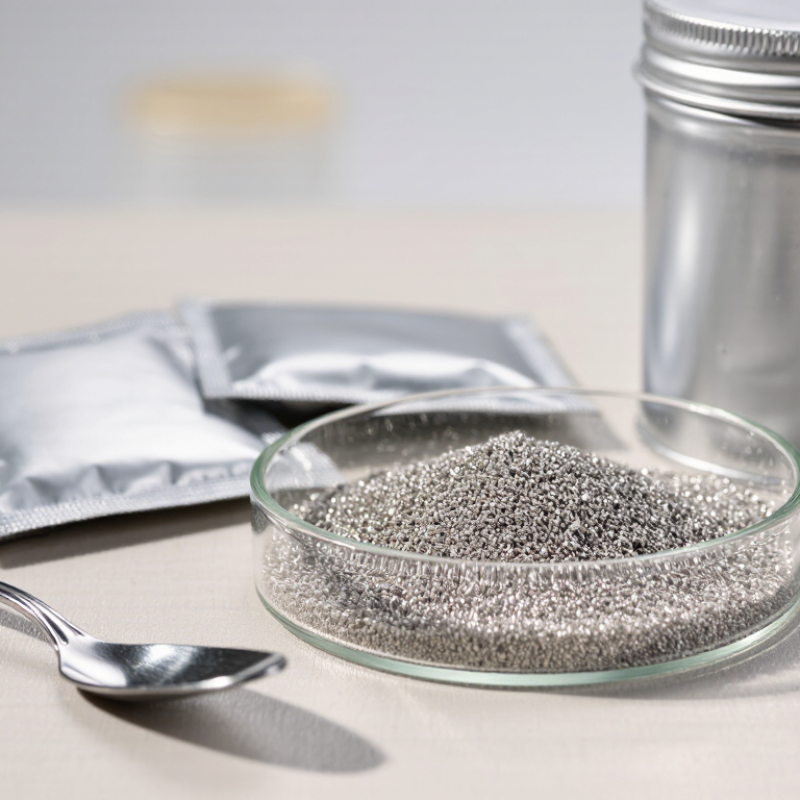
What Fine Aluminum Powder Is and How It Is Classified
Fine aluminum powder consists of small aluminum particles, but “fine” has no single universal size cutoff. Suppliers may define it by particle-size distribution, often measured in microns. Check the stated range, not just the product name. A label can hide meaningful differences.
Classification commonly considers particle size, particle shape, and aluminum purity. Spherical particles differ from flakes or irregular grains, affecting flow and surface area. Purity data and oxide content also matter. The labels are not always tidy; two products called “fine” may behave differently.
For a practical comparison, request a specification sheet showing particle-size range, morphology, purity, and test method. These details help match powder to a legitimate industrial process and compare quotations fairly. Fine powders can present serious dust and fire hazards, so rely on supplier safety documentation and appropriate professional handling controls. Small details matter. Prices vary with grade, consistency, packaging, and order quantity, so a low quote alone says little about suitability.
| Powder Type | Typical Classification | Particle Size (Typical) | Common Characteristics | Typical Applications | Indicative Bulk Price (USD/kg) | Supplier Type to Evaluate |
|---|---|---|---|---|---|---|
| Atomized aluminum powder | Fine, approximately 10–45 μm; spherical or near-spherical grades | Often specified by a particle-size distribution such as D50 and D90 | Produced by breaking molten aluminum into droplets; particle shape and size distribution depend on the atomization process. | Powder metallurgy, aluminum-based materials, and selected industrial formulations | $4–$15 | Metal powder producer with documented particle-size testing and batch traceability |
| Fine spherical aluminum powder | Very fine spherical grade, commonly below 20 μm | Grade-specific; confirm the full distribution rather than relying on a nominal size | Flow and packing behavior depend on particle shape, surface condition, and size distribution. | Specialty powder metallurgy, conductive formulations, and additive-manufacturing research | $15–$60+ | Specialty powder supplier able to provide morphology data, purity results, and safety documentation |
| Aluminum flake powder | Flake-shaped powder; classified by particle size, thickness, and surface treatment | Usually described by a size range or sieve specification; thickness is a separate property | Flat particles produce a reflective appearance; grades may be leafing or non-leafing depending on treatment and formulation. | Coatings, printing inks, and decorative or functional finishes | $8–$40+ | Pigment-grade supplier with coating compatibility and relevant regulatory information |
| Coarse atomized aluminum powder | Coarser industrial grade, commonly around 45–150 μm | Specified by sieve cuts or particle-size distribution | Generally less costly than fine or specialty grades; suitability depends on shape, purity, and application requirements. | Industrial blends, selected metallurgical processes, and other applications specified by the buyer | $3–$9 | Bulk metal powder producer offering consistent sieve analysis and material certificates |
| High-purity aluminum powder | Classified primarily by aluminum content and impurity limits, as well as particle size | Available in multiple size ranges; size should be stated separately from purity | Purity grades are not interchangeable; request limits for iron, silicon, and other relevant impurities. | Specialty materials and processes requiring controlled chemical composition | $10–$50+ | Producer or qualified distributor able to supply a certificate of analysis for each lot |
| Granulated or compacted aluminum powder | Powder processed into granules or agglomerates for handling or feeding | Granule size may be much larger than the constituent primary particles | Granule dimensions do not indicate the size of the individual powder particles; ask for both specifications. | Applications where controlled feeding or reduced dust during handling is required | $5–$20 | Processor able to document granule strength, constituent particle size, and handling characteristics |
| Price and classification note: Prices are indicative planning ranges, not current supplier quotations or guaranteed China market prices. Actual offers vary with order quantity, aluminum market conditions, purity, particle-size distribution, particle shape, surface treatment, packaging, testing, and delivery terms. “Fine” has no single universal size definition; compare suppliers using the stated test method, D10/D50/D90 or sieve data, chemical composition, and a lot-specific certificate of analysis. Aluminum powder is combustible, and fine dust may present a serious fire or explosion hazard. Confirm the safety data sheet, packaging, transport requirements, and suitability for the intended use before purchase. | ||||||