How to Choose the Right Filter Nonwoven Fabric?
Choosing the right Filter Nonwoven Fabric begins with the application, not the product label. Air filters, liquid filters, medical barriers, and industrial dust collectors require different structures. A fabric that performs well in a clean laboratory may struggle beside a hot machine or in humid air. That difference matters.
Seshadri Ramkumar, a recognized nonwovens specialist, has said, “Nonwovens are everywhere.” His observation reflects their practical reach, from cabin filters to protective equipment. However, availability does not guarantee suitability. Buyers should examine fiber type, basis weight, pore size, filtration efficiency, pressure drop, and tensile strength. Polypropylene often offers chemical resistance and low weight. Polyester can provide stronger dimensional stability. Meltblown layers capture fine particles, while spunbond layers can add support. Sometimes, a layered design works better than a thicker single layer.
Ask how the fabric will be used. Will it face oil mist, water, dust, heat, or repeated cleaning? Check performance at the real airflow rate, not only the supplier’s ideal test condition. Hold the sample against a light source. Uneven areas may reveal inconsistent web formation. Rub the surface gently. Loose fibers can signal weak bonding. These small checks are useful, though they are not laboratory proof.
I have seen specifications look excellent on paper, yet installation exposed excessive resistance. That is an uncomfortable reminder. No material is perfect. Reliable selection combines supplier records, test reports, traceability, and a controlled trial. The right Filter Nonwoven Fabric should balance protection, service life, cost, and practical handling. It should also remain dependable after conditions change.
What Is Filter Nonwoven Fabric and How Does It Work?
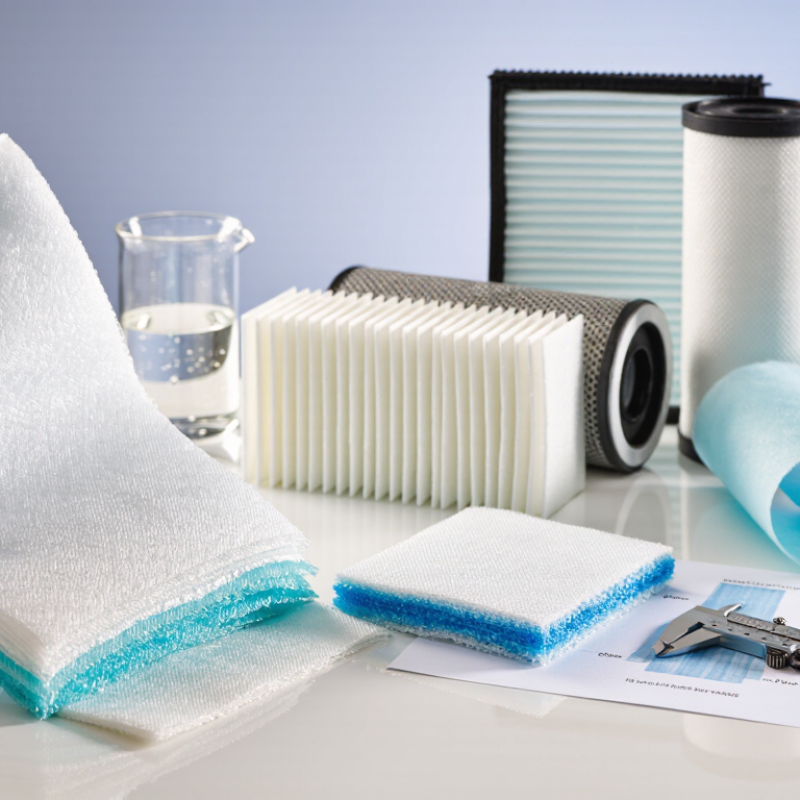
Filter nonwoven fabric is a porous sheet made from bonded fibers. The fibers may be synthetic, natural, or blended. Unlike woven cloth, it has no regular yarn grid. Its random structure creates passages that trap dust, droplets, and other particles. Air or liquid still moves through these passages. Fine fibers capture smaller particles, while thicker layers improve dirt-holding capacity. However, tighter filtration usually increases pressure loss. That trade-off matters in real equipment.
In practical selection, check fiber type, thickness, basis weight, pore size, and filtration efficiency. Also examine airflow resistance and moisture behavior. A fabric that performs well when dry may weaken after long exposure to water or chemicals. Laboratory data helps, but actual working conditions can be less predictable. Test samples at the intended flow rate and temperature. A small mistake in sizing can shorten service life.
Tips: Match the fabric to the target particle size, not just its appearance. Ask for test methods and sample results. Inspect the surface for loose fibers and uneven bonding. Consider cleaning, replacement, and disposal needs. Do not assume the thickest material filters best. Sometimes, a thinner layered structure performs better. Recheck the choice after field testing; early assumptions are often incomplete.
How to Choose the Right Filter Nonwoven Fabric?
Minimum particle filtration performance of common filter classes used with nonwoven media.
Filtration efficiency depends on fiber diameter, basis weight, electrostatic charge, air velocity, and pressure drop. HEPA and N95 values are measured at approximately 0.3 μm, while surgical mask performance is commonly tested with 3 μm biological aerosols. A higher efficiency usually requires careful control of breathability and airflow resistance.
Which Filtration Requirements Should You Define First?
Before selecting filter nonwoven fabric, define the particles you need to capture. Record their size, shape, concentration, and whether they are dry, oily, or sticky. “Fine dust” is not a useful specification by itself.
For HVAC applications, the U.S. Environmental Protection Agency’s Guide to Air Cleaners in the Home reports that MERV 13 filters capture at least 50% of particles sized 0.3–1 micrometre and 85% of particles sized 1–3 micrometres under the applicable test method. Treat these figures as a benchmark, not a promise for every nonwoven media or operating condition.
Next, set the required airflow and acceptable pressure drop. A tightly packed web may capture more particles, yet restrict airflow and raise fan energy use. Define operating temperature, humidity, chemical exposure, and cleaning or replacement interval, too.
Then ask suppliers for test results at your actual face velocity, not just a headline efficiency. Check whether testing follows a recognized method, such as ASHRAE Standard 52.2 for HVAC filters. Small details matter: a damp intake or uneven airflow can change performance.
I would not specify efficiency alone; that leaves a real gap. Some requirements may need revision after pilot testing, especially when dust loading differs from laboratory conditions.
How Do You Compare Nonwoven Filter Materials and Structures?
Choosing the right filter nonwoven fabric requires more than comparing fiber names. Begin with the contaminant, airflow, temperature, and moisture level. Fine dust may require meltblown layers with small fiber diameters. Larger particles often suit spunbond or needle-punched structures. Wet-laid materials can provide a more uniform surface for controlled filtration.
Look at the complete structure, not one material alone. A layered design can capture particles progressively and reduce early surface blockage. Pleating increases usable area inside a compact filter. However, deeper pleats may restrict airflow if the support layer is too weak. Calendering can improve strength, but excessive compression may reduce porosity. Small details matter.
Compare filtration efficiency, pressure drop, dust-holding capacity, and service life under the same test conditions. Measure performance at the actual airflow, not only at a laboratory reference rate. Check tensile strength after exposure to heat, cleaning chemicals, or humidity. In practical trials, a fabric with higher initial efficiency may load faster than expected. That result deserves attention. One field test is rarely enough.
A reliable comparison also examines pore distribution, fiber bonding, and edge sealing. Request test data with clear methods and sample thicknesses. Then repeat critical tests with production samples. I have seen promising results change after scaling. The reason was simple: fiber weight varied across the roll. Cost should be reviewed last, after performance and consistency are verified.
How Can You Select the Right Fabric Specifications?
How to Choose the Right Filter Nonwoven Fabric?
How Can You Select the Right Fabric Specifications?
Start with the dust. Identify particle size, airflow, temperature, humidity, and the expected service life. A fabric for fine powder needs different filtration behavior from one handling coarse particles. Airflow changes everything. Measure the required air permeability in a controlled test, then compare it with the actual operating pressure.
Choose basis weight, thickness, and fiber structure together. A heavier fabric may improve dust holding, but it can also increase pressure drop. Check filtration efficiency and pressure loss at the same face velocity. Otherwise, the comparison may look better than it really is. For pleated filters, examine tensile strength, crease recovery, and dimensional stability. Weak material can deform during pleating or cleaning.
The fiber type must suit the environment. Consider heat, moisture, chemicals, abrasion, and static charge. For humid applications, test wet strength rather than relying on dry data. In practical development, sample testing should use real dust and realistic airflow. Laboratory results are useful, but field conditions are often less polite.
I have seen a suitable-looking fabric fail because its edges weakened during installation. Recheck sealing, cutting, and bonding methods before approving the final specification. No specification is perfect. A small pilot trial can reveal problems that a data sheet hides.