China Top 10 Handicapped Electric Wheelchair Suppliers
Choosing a reliable Handicapped Electric Wheelchair supplier requires more than comparing product prices. Buyers need dependable engineering, clear communication, and practical support after delivery. China has a broad manufacturing base, yet supplier quality can differ greatly between factories, trading companies, and specialized mobility brands.
This guide introduces ten noteworthy Chinese suppliers for international buyers, distributors, hospitals, and home-care users. The evaluation considers manufacturing experience, product range, battery options, frame strength, controller performance, and customization capability. It also examines certifications, quality-control procedures, warranty terms, spare-parts access, and export experience. A well-designed wheelchair should move smoothly across indoor floors, ramps, and uneven outdoor paths. Seat width, turning radius, footrest design, and folding weight can affect daily comfort more than attractive photographs suggest.
Details matter.
Where possible, supplier claims should be checked through factory audits, product samples, technical documents, and customer feedback. A responsive sales team is useful, but engineering support matters more when a joystick fails or a battery needs replacement. No ranking is flawless. Production conditions may change, online reviews may be incomplete, and a suitable supplier for one market may not suit another. This article therefore offers a practical starting point rather than an absolute verdict. Readers should confirm current specifications, testing records, shipping arrangements, and local service capabilities before making a purchase. The goal is simple: identify manufacturers that combine usable design, consistent quality, transparent cooperation, and safer long-term mobility for people with disabilities.
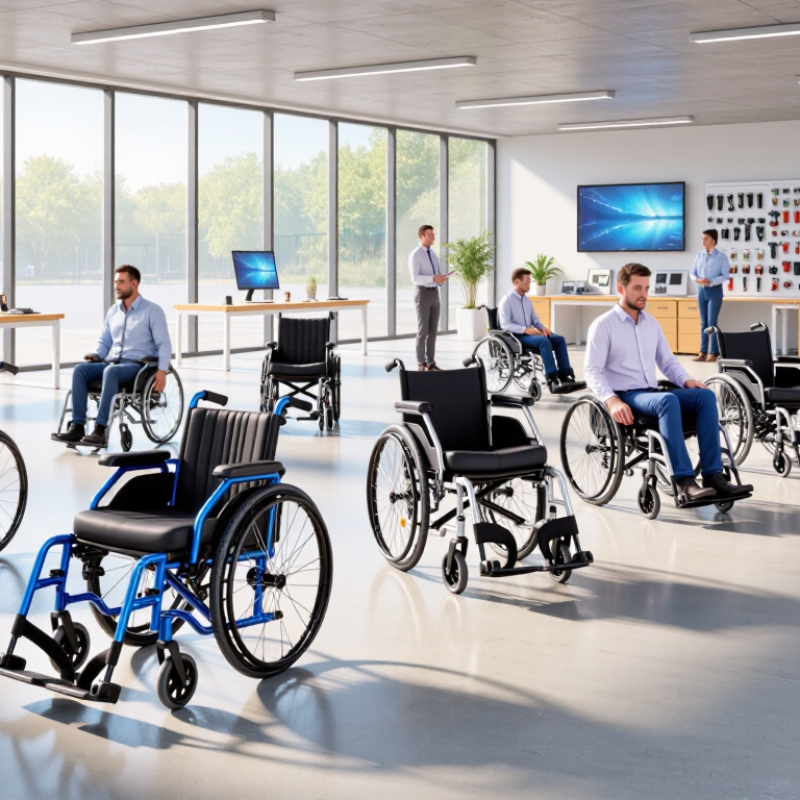
China’s Electric Wheelchair Industry: Market Scale, Demand, and Export Data
China’s electric wheelchair industry has expanded through aging demand, rehabilitation needs, and wider home-care use. Market scale is difficult to measure precisely because reports classify powered wheelchairs differently. Some include mobility scooters, while others count only medical-grade products. A ranking of the top ten suppliers can therefore be useful, but it should not replace product verification.
Export activity remains significant across Asia, Europe, the Middle East, and North America. Customs records can show shipment value and volume, yet they may combine several mobility products under one code. That creates room for error. Buyers should compare recent export records, certification documents, battery transport compliance, and destination-market requirements. A strong supplier should also explain load capacity, motor performance, turning radius, charging time, and warranty handling in clear technical language.
Demand is becoming more practical. Users often need a compact chair for apartment corridors, public transport, or uneven pavements. Caregivers may prioritize folding weight and transfer safety over maximum speed. Suppliers serving this market increasingly offer adjustable seating, electromagnetic brakes, removable batteries, and customized controls. However, catalog claims are not always equal to daily performance. Testing a sample on ramps, rough ground, and narrow doorways can reveal weaknesses that factory photos hide. After-sales support remains uneven, especially when replacement parts cross borders. That is an uncomfortable point, but it matters more than a low quotation.
Ranking Methodology: ISO 7176 Tests, GB/T 13800 Compliance, and Supplier Audits
China Top 10 Handicapped Electric Wheelchair Suppliers
This ranking evaluates suppliers through ISO 7176 test evidence, GB/T 13800 compliance, and independent supplier audits. ISO 7176 checks practical performance, including stability, braking, durability, and control behavior. We review complete reports, not isolated certificates. Test dates, laboratory identity, sample configuration, and failed items all matter. A wheelchair may pass one test and still perform poorly on uneven pavements.
GB/T 13800 compliance adds a China-specific safety reference for electric wheelchairs. We compare declared specifications with actual samples, including speed limits, turning space, battery protection, and load performance. Supplier audits examine production records, incoming materials, calibration logs, worker training, and complaint handling. Factory visits provide useful evidence, but they have limits. Conditions can look unusually orderly during an announced audit. Repeat checks would be stronger. Paperwork is not proof.
Tips: Ask for the exact model tested, not a similar model. Check whether the report covers the current battery and controller. Request corrective-action records for failed tests. Observe a loaded chair climbing a ramp, stopping on a slope, and crossing a rough surface. Record noise, steering delay, and frame movement. Small details reveal consistency. Our ranking gives more weight to traceable evidence, repeatable quality, and transparent communication than to low prices or polished sales claims.
Technical Comparison: 24V Systems, Battery Capacity, Range, Load, and Weight
When comparing China’s top 10 handicapped electric wheelchair suppliers, technical figures matter more than polished catalogs. Most compact models use 24V electrical systems. A 24V, 20Ah battery stores about 480Wh before real-world losses. Larger 24V, 30Ah packs provide approximately 720Wh. However, advertised range often exceeds daily performance. The ISO 7176-4 range test uses controlled conditions, while hills, cold weather, tire pressure, and user weight reduce distance.
Battery capacity should match the intended route. A practical folding wheelchair may travel 15–25 kilometers per charge under moderate conditions. Heavy-duty designs can carry around 120–150 kilograms, but their motors consume more energy. Product weight also varies sharply. Lightweight frames may weigh 25–30 kilograms, while reinforced models can exceed 40 kilograms. The WHO and UNICEF Global Report on Assistive Technology (2022) highlights the growing global need for reliable mobility products, making transparent specifications increasingly important. Some supplier data still feels optimistic.
Tips: Ask for tested range, not marketing range. Request battery watt-hours, charger details, climbing limits, and measured chair weight. Check whether load ratings include luggage. Confirm testing conditions. Small omissions matter.
Field experience suggests a 24V system is adequate for level indoor routes. Outdoor users may need stronger motors and larger batteries. Yet extra capacity increases weight. That trade-off is easy to overlook. A careful buyer should compare ISO-based test results, warranty terms, replacement battery availability, and independent inspection records before selecting a supplier.
China Top 10 Handicapped Electric Wheelchair Suppliers - Technical Comparison: 24V Systems, Battery Capacity, Range, Load, and Weight
| Supplier Reference | Representative Wheelchair Configuration | Drive System | Electrical System | Battery Capacity | Estimated Range | Maximum User Load | Chair Weight | Maximum Speed | Typical Use |
| Supplier 01 | Standard rear-wheel-drive folding chair | 2 × 250 W | 24 V DC | 2 × 12 Ah lead-acid | 10–12 km | 120 kg | 38 kg | 6 km/h | Indoor and short outdoor trips |
| Supplier 02 | Lightweight aluminum folding chair | 2 × 180 W | 24 V DC | 2 × 10 Ah lithium-ion | 12–15 km | 100 kg | 22 kg | 6 km/h | Travel and urban mobility |
| Supplier 03 | Heavy-duty rear-wheel-drive chair | 2 × 350 W | 24 V DC | 2 × 20 Ah lead-acid | 18–22 km | 150 kg | 52 kg | 6 km/h | Daily outdoor use and longer distances |
| Supplier 04 | Compact mid-wheel-drive chair | 2 × 250 W | 24 V DC | 2 × 12 Ah lithium-ion | 15–18 km | 120 kg | 29 kg | 6 km/h | Indoor maneuverability and paved surfaces |
| Supplier 05 | Reclining folding power chair | 2 × 250 W | 24 V DC | 2 × 20 Ah lithium-ion | 20–25 km | 130 kg | 34 kg | 6 km/h | Home, care facilities, and outdoor paths |
| Supplier 06 | All-terrain rear-wheel-drive chair | 2 × 350 W | 24 V DC | 2 × 20 Ah lithium-ion | 22–28 km | 140 kg | 42 kg | 8 km/h | Outdoor terrain and moderate inclines |
| Supplier 07 | Ultra-light carbon-frame folding chair | 2 × 150 W | 24 V DC | 2 × 10 Ah lithium-ion | 10–13 km | 100 kg | 18 kg | 6 km/h | Air travel and occasional transport |
| Supplier 08 | Front-wheel-drive compact chair | 2 × 250 W | 24 V DC | 2 × 12 Ah lithium-ion | 13–16 km | 115 kg | 31 kg | 6 km/h | Indoor use and smooth outdoor surfaces |
| Supplier 09 | Heavy-duty reclining power chair | 2 × 450 W | 24 V DC | 2 × 30 Ah lead-acid | 22–27 km | 180 kg | 68 kg | 6 km/h | High-load daily mobility |
| Supplier 10 | Portable stair-climbing compatible chair | 2 × 250 W | 24 V DC | 2 × 15 Ah lithium-ion | 14–18 km | 120 kg | 27 kg | 6 km/h | Portable use and accessibility-focused environments |
Technical note: The figures shown are representative specifications for commonly offered configurations in the Chinese electric wheelchair market. Actual performance depends on battery chemistry, rider weight, terrain, temperature, tire pressure, speed, and supplier-selected components. Range values are estimated under controlled, level-surface conditions and should be verified against the final quotation and test report.
Procurement Review: CE Marking, Warranty Terms, MOQ, Lead Times, and After-Sales Support
China’s top electric wheelchair suppliers should be judged by evidence, not catalogue size. The WHO and UNICEF Global Report on Assistive Technology (2022) estimates that more than 2.5 billion people need assistive products. Demand may exceed 3.5 billion by 2050. This makes supplier verification a practical safety issue. Request the EU Declaration of Conformity, risk assessment, test reports, and traceable serial numbers. CE marking alone is not enough. Check whether the documentation matches the exact wheelchair model, battery, and charger.
Warranty terms need close reading. A reliable quotation should state coverage for the frame, motor, controller, battery, and upholstery separately. Twelve months may be acceptable for electronics, but battery exclusions can weaken the offer. Ask for failure rates, spare-part prices, and a written repair process. ISO 7176 testing covers wheelchair stability, performance, and durability, yet a certificate does not guarantee comfortable daily use. A short outdoor trial can reveal vibration, turning limits, and weak brakes. Small details matter.
MOQ and lead time often expose procurement risk. A low MOQ can hide higher prices or limited customization. Confirm sample charges, production capacity, inspection points, and shipment dates. For regular orders, request a 30-day rolling forecast and penalties for avoidable delays. The WHO Guidelines on the Provision of Manual Wheelchairs note that only a small share of people needing wheelchairs receive suitable products. After-sales support should include remote diagnosis, local technician training, and parts availability for at least three years. I would still keep a backup supplier. Forecasts fail, sometimes for ordinary reasons.
China Top 10 Handicapped Electric Wheelchair Suppliers - Procurement Review
CE Marking, Warranty Terms, MOQ, Lead Times, and After-Sales Support
The chart presents an anonymized benchmark of 10 supplier profiles. The procurement score is calculated from CE documentation availability, warranty length, minimum order quantity, production lead time, and after-sales response time. Higher scores indicate more favorable overall purchasing conditions. Typical terms shown are 12–24 months of warranty, MOQs of 1–10 units, lead times of 15–45 days, and support response times of 12–48 hours. Final terms should be confirmed in the supplier quotation and contract.