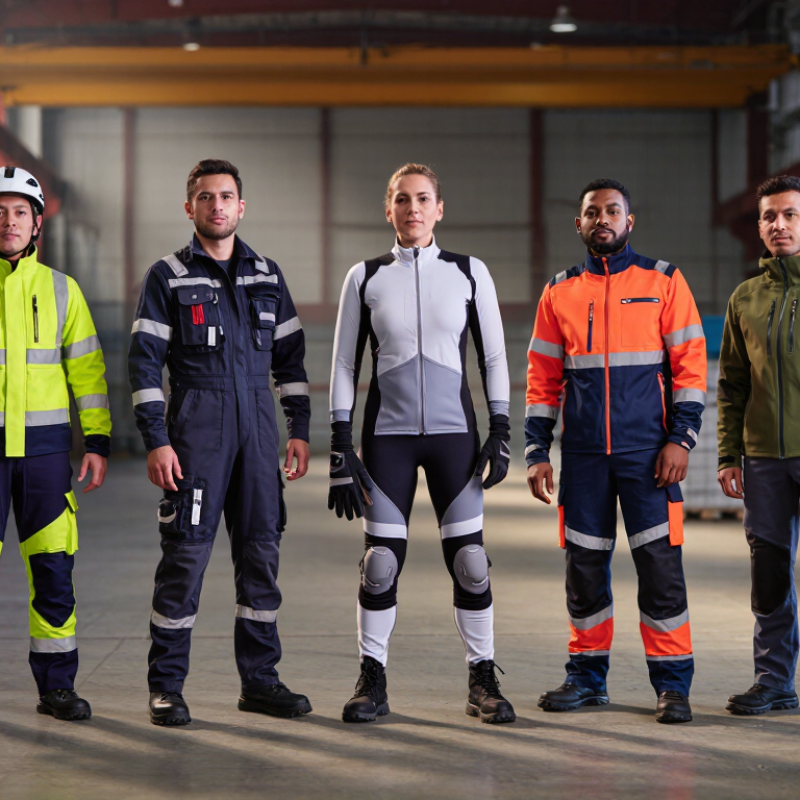
What Are the Top Workwear Types for 2026?

Workwear in 2026 will be shaped by safety, comfort, durability, and changing workplace demands. Workers need clothing that performs during long shifts, sudden weather changes, and repetitive movement. A warehouse operator may require reinforced knees and breathable panels. A technician may value flame-resistant fabrics, high-visibility details, and secure tool storage. These practical differences make one universal workwear solution unrealistic.

This guide examines the top workwear types expected to influence professional clothing in 2026. It considers high-visibility garments, protective outerwear, technical uniforms, durable trousers, and climate-adaptive layers. Each category should be judged through workplace risk assessments, recognized safety standards, and direct worker feedback. Fabric testing matters. So does everyday fit.

Small details often decide performance.

A jacket that restricts shoulder movement may slow a task. Poorly placed pockets can create discomfort or snag hazards. Sustainable materials may reduce environmental impact, but their durability must be verified through repeated use. No forecast is flawless. New technologies can appear impressive before real workers test them across demanding conditions. Employers should therefore compare supplier evidence, maintenance requirements, and replacement costs before choosing a uniform program. This approach supports informed decisions rather than chasing temporary fashion. It also keeps worker safety at the center of every Workwear investment.

What Are the Top Workwear Types for 2026?

Defining Workwear and Its Role in 2026

Workwear is clothing designed to support real tasks, not merely create a professional appearance. In 2026, its role combines protection, comfort, identity, and practical performance. A warehouse worker may need reinforced trousers, breathable shirts, and shoes with stable soles. A technician may require multiple pockets, weather resistance, and easy movement around equipment. These details matter during long shifts.

The strongest workwear types include protective outerwear, utility trousers, durable shirts, coveralls, and safety footwear. High-visibility garments remain important near vehicles, construction areas, and low-light conditions. Lightweight layers help workers adjust between heated interiors and cold outdoor sites. Moisture-managing fabrics can reduce discomfort, but they cannot solve every workplace problem. Fit still matters most.

Modern workwear should also support different bodies, climates, and working styles. Adjustable cuffs, flexible waistbands, and accessible fastenings make daily tasks less tiring. Some garments now include traceable materials or temperature-regulating textiles, although claims should be checked carefully. Practical testing remains essential. A jacket that looks excellent online may restrict movement when someone reaches overhead. I have seen well-designed clothing fail because its pockets were too shallow. That small flaw can become frustrating after hundreds of uses. Workwear in 2026 should respond to workers’ feedback, not only follow seasonal fashion.

Key Features of Effective 2026 Workwear

Effective workwear in 2026 should protect employees without making movement difficult. In my experience, comfort directly affects concentration during long shifts. Lightweight stretch fabrics can support bending, climbing, and repeated lifting. Breathability matters too, especially in warm workshops or outdoor environments. Soft inner seams may prevent irritation around the neck and wrists. Small details matter.

Durability remains essential. Reinforced knees, strong stitching, and secure pockets help garments survive daily pressure. High-visibility panels can improve awareness in dim areas when used correctly. Modern workwear should also offer practical layering, allowing workers to adapt to changing temperatures. Inclusive sizing is important, because poor fit can restrict movement or create safety risks. However, no fabric solves every problem. Designers still need feedback from real workers.

Tips: Test garments during realistic tasks, not only in a fitting room. Check whether pockets stay closed while bending. Look for adjustable cuffs, breathable panels, and washable materials. Choose colors that hide ordinary dust but remain visible when needed. Inspect seams after several washes. A small trial group can reveal problems that specifications miss. Keep records of wear, repairs, and user comments. This evidence supports better purchasing decisions, although it may expose weaknesses in an otherwise attractive design.

What Are the Top Workwear Types for 2026?

Key features of effective 2026 workwear, based on recognized protection standards and practical workplace requirements.

High-visibility, flame-resistant, arc-rated, chemical-resistant, waterproof and safety footwear remain important workwear categories. The index summarizes the breadth of protection priorities associated with each type; it is not a market-share forecast. Relevant standards include EN ISO 20471, ISO 11612, IEC 61482-2, EN 13034, EN 343 and ISO 20345.

Top Workwear Types by Industry and Job Function

What Are the Top Workwear Types for 2026?

Top Workwear Types by Industry and Job Function

Manufacturing and construction teams need workwear that supports movement and manages visible risks. High-visibility jackets, reinforced trousers, safety footwear, and cut-resistant gloves remain practical choices. For welding and fabrication, flame-resistant layers, face shields, and leather aprons provide added protection. Ventilated fabrics matter in hot workshops. A heavy uniform can become a hazard when workers overheat or remove it.

Healthcare staff require cleanable, flexible garments that support long shifts. Scrub tops, stretch trousers, fluid-resistant jackets, and slip-resistant shoes fit different clinical roles. Laboratory workers may need protective coats, goggles, and chemical-resistant gloves. Fit deserves attention. Loose sleeves can catch equipment, while tight clothing can restrict urgent movement. Experienced supervisors should match garments to actual tasks, not job titles alone.

Logistics workers benefit from breathable high-visibility vests, cargo trousers, durable footwear, and weatherproof outer layers. Hospitality teams often choose stain-resistant shirts, lightweight aprons, and comfortable non-slip shoes. Utility technicians may need arc-rated clothing, insulated gloves, helmets, and waterproof shells, based on assessed exposure. Office-based field staff need less protection but still benefit from smart, washable layers and supportive shoes. I have seen teams select uniforms for appearance first, then struggle with heat, storage, or restricted movement. That mistake is easy to repeat. A careful fitting session, task-based risk review, and seasonal trial can reveal problems before wider distribution. Every workplace differs. Safety standards and local requirements should guide the final specification.

Materials, Safety Standards, and Smart Clothing Trends

What Are the Top Workwear Types for 2026?

Materials, Safety Standards, and Smart Clothing Trends

Workwear in 2026 will favor lighter, tougher, and more traceable materials. Textile Exchange’s 2024 Materials Market Report recorded 124 million tonnes of global fiber production in 2023. It projects about 160 million tonnes by 2030. Recycled fibers can reduce pressure on virgin resources, but durability still matters. A torn knee cannot protect anyone. Practical trials should test abrasion, washing, heat, and restricted movement. Soft fabrics often feel better, yet they may fail sooner in harsh environments.

Safety design must begin with the hazard, not the fashion trend. The ILO estimated 2.93 million work-related deaths and 395 million non-fatal injuries annually. High-visibility garments should follow ISO 20471 or ANSI/ISEA 107, where applicable. Protective clothing should also match relevant requirements under ISO 13688. Rainwear may require EN 343 testing. Standards differ between regions. This creates confusion. Procurement teams should record the exact class, test method, and replacement schedule.

Smart workwear is moving beyond simple location tracking. Embedded sensors can monitor posture, heat exposure, heart rate, or impact events. Deloitte’s 2024 Smart Manufacturing and Operations Survey found that 86% of surveyed executives considered smart manufacturing important. Still, connected clothing is not automatically safer. Batteries need secure placement, sensors need calibration, and workers need clear privacy controls. Field tests often expose uncomfortable seams and false alerts. That is useful evidence, not failure. A clever garment that workers avoid becomes expensive decoration.

What Are the Top Workwear Types for 2026? — Materials, Safety Standards, and Smart Clothing Trends

Workwear Type Typical Applications Common Materials Key Protection Features Relevant Safety Standards 2026 Smart Clothing Trend Recommended Selection Criteria
High-Visibility Workwear Road construction, traffic control, logistics yards, rail maintenance, and low-light workplaces. Polyester or polyester-cotton base fabric with fluorescent fabric and retroreflective tape. Daylight conspicuity, night-time reflectivity, color retention, and visibility in adverse weather. EN ISO 20471:2013+A1:2016 ANSI/ISEA 107-2020 Connected visibility systems using optional location tags, proximity alerts, and condition-monitoring sensors. Choose the correct visibility class, adequate reflective area, weather resistance, and compatibility with other PPE.
Flame-Resistant and Arc-Rated Clothing Electrical utilities, power generation, industrial maintenance, and work involving flash-fire or electric-arc hazards. Inherently flame-resistant aramid, modacrylic, FR cotton, or blended technical fibers. Self-extinguishing performance, reduced after-flame, thermal protection, and resistance to molten-metal or arc exposure where specified. EN ISO 11612:2015 IEC 61482-2:2018 ASTM F1506 Arc-exposure data logging and garment-integrated identification systems that support inspection and replacement records. Match the garment’s tested protection level to the hazard assessment; do not substitute fabric weight for certified performance.
Welding and Heat-Protection Workwear Welding, cutting, foundries, metal fabrication, glass processing, and hot-process manufacturing. Flame-resistant cotton, treated cotton, leather panels, aramid blends, and heat-resistant accessories. Protection from sparks, small molten-metal splashes, radiant heat, convective heat, and limited flame exposure. EN ISO 11611:2015 EN ISO 11612:2015 Thermal comfort monitoring through lightweight layering, moisture sensors, and heat-stress alerts in higher-risk environments. Use close-fitting designs, covered fasteners, durable closures, and suitable protection for the welding process and exposure level.
Chemical-Resistant Workwear Chemical processing, laboratory support, agricultural chemical handling, cleaning operations, and industrial spill response. Chemical-resistant coated fabrics, laminated multilayers, high-density polyethylene fibers, and specialized barrier films. Resistance to penetration, permeation, liquid splash, and particulate exposure, depending on the tested chemical. EN 13034:2005+A1:2009 EN 14605:2005+A1:2009 ISO 6529:2013 Digital chemical inventory links that connect garment records with chemical hazard information and decontamination procedures. Verify breakthrough time and permeation data for the exact chemical, concentration, temperature, and exposure duration.
Waterproof and Weather-Protection Workwear Construction, utilities, forestry, outdoor maintenance, marine operations, and emergency response. Polyester or nylon shells with polyurethane or microporous membranes, seam-sealed construction, and durable water-repellent finishes. Protection from rain, wind, wet conditions, and loss of thermal comfort caused by moisture accumulation. EN 343:2019 ISO 811:2018 Adaptive ventilation using moisture and temperature sensors to help regulate comfort during changing activity levels. Assess waterproofness, breathability, seam construction, hood adjustment, packability, and performance after laundering.
Cut- and Puncture-Resistant Workwear Glass handling, sheet-metal work, recycling, food processing, woodworking, and knife-risk operations. High-performance polyethylene, aramid, engineered yarns, stainless-steel blends, leather, and reinforced woven fabrics. Resistance to cuts, punctures, abrasion, and tearing in targeted garment zones such as sleeves, aprons, or trousers. EN ISO 13997:2019 EN 388:2016+A1:2018 ISO 21420:2020 Zone-specific sensing that records high-wear areas and supports condition-based garment replacement. Consider the actual cutting force, sharpness, impact, abrasion, dexterity, and whether the protection is garment- or glove-specific.
Antistatic and Electrostatic-Control Clothing Electronics manufacturing, explosive atmospheres, pharmaceutical production, fuel handling, and dust-sensitive operations. Polyester or polyamide fabrics with conductive carbon, stainless-steel, or other dissipative fibers. Controlled charge dissipation and reduced electrostatic discharge when used as part of a properly grounded system. EN 1149-5:2018 IEC 61340-5-1:2016 EN 60079-0:2018 Wearable grounding verification and digital checks for continuity, laundering history, and ESD-control compliance. Evaluate the complete system, including footwear, grounding, humidity, work practices, and restrictions on insulating layers.
Ergonomic and Exoskeleton-Compatible Workwear Warehousing, manufacturing, construction, order picking, repetitive handling, and physically demanding maintenance. Stretch woven fabrics, four-way mechanical stretch materials, spacer textiles, reinforced panels, and low-friction linings. Freedom of movement, reduced seam stress, load distribution, ventilation, and compatibility with assistive equipment. ISO 13688:2013 ISO 12947-2:2016 ISO 6330:2021 Wearable ergonomics using motion sensors to identify awkward postures, repetitive motion, or excessive exertion. Prioritize unrestricted movement, low pressure points, washable components, equipment compatibility, and validated ergonomic benefits.
Temperature-Regulating and Cooling Workwear Foundries, kitchens, outdoor summer work, cold storage, winter construction, and variable-temperature workplaces. Moisture-wicking knits, phase-change materials, reflective textiles, insulating fibers, and ventilated mesh zones. Moisture management, insulation, evaporative cooling support, thermal comfort, and reduced heat-stress burden. EN ISO 11079:2007 ISO 9920:2007 EN ISO 13688:2013 Personal thermal management through connected temperature sensors, smart ventilation, and rechargeable cooling modules. Use a layered system and assess activity level, ambient conditions, clothing insulation, battery safety, and cleaning requirements.
Connected Smart Workwear Remote inspection, lone-worker protection, asset-intensive maintenance, emergency response, and high-risk industrial sites. Conventional protective textiles combined with flexible conductive pathways, removable sensor modules, and ruggedized electronics. Potential monitoring of location, impact, posture, temperature, heart rate, fatigue indicators, and emergency signals. ISO 13688:2013 IEC 62368-1:2018 IEC 60529:2013 Modular, washable, privacy-aware systems with detachable electronics, edge processing, battery diagnostics, and interoperable data platforms. Confirm that electronics do not reduce the garment’s certified protection; assess privacy, cybersecurity, battery temperature, ingress protection, and maintenance.

Note: Standards and protection classes must be selected according to a documented workplace risk assessment. Certification requirements, legal obligations, test methods, and edition dates can differ by country and application. Smart features supplement—not replace—certified protective performance and established safety procedures.

How to Choose the Right Workwear for Different Work Environments

Choosing workwear for 2026 begins with the environment, not the catalogue. A garment suitable for an office may fail in a warehouse. Walk through the site during its busiest hour. Notice dust, oil, sharp edges, noise, and temperature changes. For construction, choose reinforced trousers, durable boots, and high-visibility layers. Add helmets, eye protection, or hearing protection when the task requires them. Fit matters as much as fabric. Loose cuffs can catch, while tight sleeves restrict reaching.

Healthcare workers often need breathable, easy-care garments with secure pockets and flexible movement. In food preparation areas, smooth fabrics and washable footwear help reduce contamination risks. Cold-storage staff need insulated layers, thermal socks, and gloves that preserve finger control. Choose moisture-wicking base layers for hot workshops, then test whether they dry quickly after heavy movement. Comfort is not a luxury. It affects concentration.

Newer workwear types include stretch garments, modular layers, and fabrics made partly from recycled materials. However, sustainability claims still need careful checking. I once assumed a lighter fabric would feel better all day, but it wore through quickly near the knees. That mistake changed my fitting process. Test clothing while bending, climbing, lifting, and sitting. Check seams after repeated washing. Ask workers what irritates them. Their answers may expose problems that a product sheet misses. A perfect uniform rarely exists. Safe, practical improvement does.