
China’s medical innovation landscape is moving from rapid manufacturing toward integrated, evidence-based healthcare solutions. Global buyers now encounter AI-assisted imaging, robotic surgery systems, wearable monitoring devices, advanced in-vitro diagnostics, and digitally connected hospital platforms. These products are not equally mature. Some have strong clinical validation, while others still need broader evidence and clearer international approval pathways.
Dr. Eric Topol, a leading physician and digital medicine researcher, has often emphasized, “AI will not replace doctors, but doctors who use AI will replace those who don’t.” This insight frames today’s medical innovation trends in China. The real opportunity is not technology alone. It is the practical combination of clinical expertise, reliable data, trained professionals, and measurable patient outcomes. A buyer should examine more than a polished demonstration. Ask about trial design, cybersecurity, maintenance support, interoperability, and performance in busy hospitals.
The following outline explores China’s most relevant medical innovation trends for global buyers. It considers artificial intelligence, surgical robotics, precision medicine, medical devices, digital health, and biotechnology. It also looks at manufacturing scale, regulatory readiness, export experience, and supplier transparency. The picture is promising, but not neat. A low price can hide training gaps or weak after-sales service. A sophisticated device may still lack local clinical evidence. Careful evaluation remains essential. Buyers should compare certifications, published studies, reference hospitals, and total ownership costs before making decisions. Innovation matters. Reliability matters more.
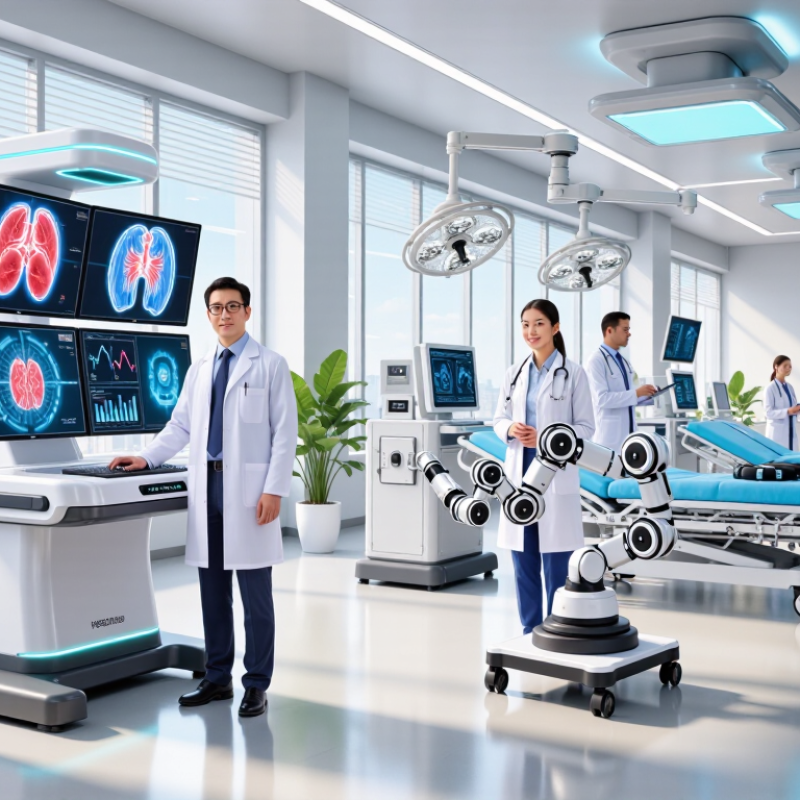
China’s medical innovation landscape is becoming more application-driven, but global buyers need more than headline approvals.
The NMPA reported 61 innovative medical devices approved in 2023, reflecting stronger domestic capabilities in imaging, surgical tools, and digital diagnostics.
The China Association for Medical Devices Industry estimated the market exceeded RMB 1.3 trillion that year.
These figures suggest scale and momentum. They do not automatically prove clinical value, export readiness, or stable supply.
Global buyers should examine the complete evidence chain.
During a factory visit, inspect cleanroom zoning, calibration records, traceability labels, and complaint-handling procedures. Request clinical evaluation reports, cybersecurity files, usability studies, and change-control histories.
A supplier with excellent prototypes may still lack consistent batch control. For digital products, confirm data governance, update procedures, and compatibility with the buyer’s hospital systems.
The National Bureau of Statistics reported China’s research and development expenditure reached RMB 3.63 trillion in 2024, or 2.68% of GDP.
That wider investment supports innovation capacity, yet it is not medical evidence by itself. Buyers should remain curious, and slightly skeptical, when a product’s technical story moves faster than its independent validation.
China’s healthcare innovation is moving from pilot projects toward practical clinical use. Artificial intelligence now supports image analysis, triage, and treatment planning in selected hospitals. It can flag small changes in scans. Clinicians still make the final decision. This human review remains essential because training data may not represent every region or patient group.
Remote monitoring is another important driver. Wearable sensors can track heart rate, oxygen levels, glucose patterns, and recovery at home. Connected platforms send alerts to care teams when readings cross agreed thresholds. For global buyers, interoperability matters as much as device accuracy. A useful system should exchange data through recognized standards and protect patient information during transmission and storage. In practice, integration is rarely smooth.
China is also advancing minimally invasive equipment, digital surgery tools, and intelligent rehabilitation systems. Robotic assistance may improve precision in complex procedures, while simulation tools help train medical staff. The value depends on clinical evidence, maintenance support, and clear regulatory pathways. Buyers should examine validation studies, cybersecurity controls, service response times, and local workflow requirements. Low cost alone is not enough. Some solutions still need longer follow-up and broader testing. That limitation deserves honest discussion, especially when technologies cross borders.
China’s total health expenditure increased from RMB 6.58 trillion in 2019 to RMB 9.05 trillion in 2023. This expanding healthcare investment base is supporting the adoption of AI-assisted diagnostics, telemedicine, medical robotics, genomics, digital therapeutics, and connected medical devices—key technology areas for global healthcare buyers evaluating China’s innovation ecosystem.
Source: National Health Commission of the People’s Republic of China, China Health Statistics Yearbook and annual health development statistics. Figures rounded to two decimal places.
China Top Medical Innovation Trends for Global Buyers?
Major Medical Product Categories and Their Applications
China’s medical manufacturing sector now covers diagnostics, imaging, monitoring, surgery, rehabilitation, and home care. For global buyers, category fit matters more than novelty. In vitro diagnostic products support blood testing, infection screening, and chronic disease management. Portable analyzers can help smaller clinics, but calibration remains essential.
Medical imaging equipment serves radiology, emergency care, and surgical planning. Ultrasound systems are useful in maternity units and rural hospitals because they are compact and relatively mobile. Patient monitors track oxygen levels, heart rhythm, temperature, and blood pressure. They support operating rooms, intensive care, and bedside observation. Surgical instruments require precise materials, reliable sterilization, and clear maintenance procedures. Rehabilitation devices assist mobility training, muscle recovery, and post-operative exercise.
Tips: Ask for clinical evidence, technical files, test reports, and user training plans. Check electrical safety, data protection, labeling, and local registration requirements. Request sample testing before larger orders. Small details matter. A low purchase price may hide replacement costs, software limitations, or difficult servicing. Buyers should also confirm spare-part availability and response times in writing. Not every smart feature improves care. Sometimes, a simpler device is safer for busy staff. Yet product comparisons can remain incomplete when hospital feedback is limited, so independent evaluation deserves more attention.
| Medical Product Category | Representative Products | Primary Clinical Applications | Key Innovation Trends in China | Typical Buyer Value | Important Compliance and Quality Considerations |
|---|---|---|---|---|---|
| Medical Imaging Equipment | Ultrasound systems Digital radiography CT systems MRI systems | Radiology, cardiology, obstetrics, emergency care, oncology screening, and surgical planning. | Artificial-intelligence-assisted image analysis, compact system design, improved workflow automation, lower-dose imaging, and cloud-enabled image sharing. | Broader access to diagnostic imaging, reduced examination time, remote consultation support, and lower total ownership cost. | Electrical safety, electromagnetic compatibility, image quality validation, cybersecurity, software lifecycle controls, and compliance with the destination market’s medical-device regulations. |
| In-Vitro Diagnostic Systems | Clinical chemistry analyzers Immunoassay systems Hematology analyzers Molecular tests | Infectious-disease testing, cancer biomarkers, diabetes monitoring, cardiovascular risk assessment, and routine laboratory diagnostics. | Higher automation, integrated sample-to-answer workflows, multiplex molecular testing, faster turnaround, and data connectivity with laboratory information systems. | Improved laboratory productivity, consistent testing processes, reduced manual handling, and support for decentralized or near-patient testing. | Analytical sensitivity and specificity, reagent stability, calibration traceability, specimen requirements, quality-control procedures, and local registration of instruments and reagents. |
| Patient Monitoring and Digital Health | Bedside monitors Wearable sensors Remote monitoring platforms Telemedicine tools | Intensive care, general wards, chronic disease management, home care, rehabilitation, and post-discharge follow-up. | Wireless connectivity, continuous vital-sign monitoring, predictive alerts, interoperable data platforms, and integration with electronic health records. | Earlier identification of deterioration, improved care continuity, reduced unnecessary hospital visits, and enhanced home-based care delivery. | Clinical validation, alarm performance, data privacy, encryption, interoperability, battery safety, usability, and clear separation between wellness functions and regulated medical functions. |
| Minimally Invasive and Endoscopic Devices | Endoscopes Endoscopic instruments Interventional accessories Surgical visualization systems | Gastroenterology, urology, gynecology, thoracic procedures, arthroscopy, and minimally invasive surgery. | Higher-definition visualization, improved ergonomics, single-use components, image-enhancement software, and procedure-specific instrument design. | Smaller incisions, shorter recovery periods, improved visualization, and potentially lower procedure-related resource use. | Biocompatibility, sterilization or single-use labeling, optical performance, mechanical durability, infection-control requirements, and clinical evidence for the intended procedure. |
| Surgical and Rehabilitation Robotics | Surgical navigation systems Rehabilitation robots Powered exoskeletons Assistive systems | Orthopedics, neurosurgery support, rehabilitation after stroke or injury, gait training, and mobility assistance. | Sensor fusion, image-guided navigation, force feedback, adaptive control algorithms, modular platforms, and more affordable rehabilitation solutions. | Repeatable procedures, personalized rehabilitation protocols, improved training data, and support for facilities with limited specialist availability. | Software validation, human-factors engineering, mechanical and electrical safety, fail-safe behavior, cybersecurity, operator training, and evidence of clinical effectiveness. |
| Implantable and Interventional Products | Orthopedic implants Vascular devices Spinal products Interventional catheters | Joint reconstruction, fracture fixation, vascular intervention, spinal treatment, and minimally invasive cardiovascular procedures. | Patient-specific planning, additive manufacturing, advanced coatings, improved material engineering, and image-guided delivery systems. | Procedure-specific product selection, improved anatomical fit, potentially shorter operating times, and expanded treatment options. | Material characterization, biocompatibility, sterilization validation, fatigue and mechanical testing, packaging integrity, traceability, and long-term clinical follow-up requirements. |
| Medical Consumables and Infection Control | Syringes and needles Infusion sets Wound-care products Protective products | Medication administration, infusion therapy, wound management, operating-room protection, and hospital infection prevention. | Safety-engineered designs, antimicrobial and advanced wound dressings, improved barrier materials, traceable packaging, and more sustainable manufacturing. | Reduced needlestick risk, efficient inventory management, improved wound-care outcomes, and dependable supply for high-volume clinical use. | Sterility assurance, bioburden control, barrier performance, shelf-life data, latex and allergen declarations, packaging validation, and consistent lot traceability. |
| Medical Furniture and Hospital Infrastructure | Electric hospital beds Patient trolleys Operating tables Modular clinical units | Acute-care hospitals, operating rooms, intensive care, outpatient clinics, and long-term care facilities. | Electric adjustment, fall-prevention functions, pressure-injury prevention, modular installation, energy efficiency, and connected asset management. | Improved patient and staff ergonomics, more efficient space utilization, easier cleaning, and reduced maintenance complexity. | Load and stability testing, electrical safety, infection-control design, fire performance, ergonomic evaluation, spare-parts availability, and local installation requirements. |
| Pharmaceutical and Bioprocess Equipment | Cleanroom systems Filling equipment Bioreactor systems Cold-chain equipment | Vaccine production, biologics manufacturing, sterile drug filling, laboratory research, and temperature-controlled distribution. | Process automation, single-use assemblies, real-time monitoring, energy-efficient systems, digital batch records, and improved cold-chain visibility. | More consistent production, reduced contamination risk, improved process documentation, and better temperature control across the supply chain. | Good Manufacturing Practice requirements, validation documentation, cleanability, data integrity, temperature mapping, calibration, materials compatibility, and supplier change control. |
| AI and Healthcare Software | Clinical decision support Radiology software Hospital information systems Supply-chain platforms | Clinical workflow management, image interpretation support, patient triage, resource planning, and medical-record administration. | Generative-AI-assisted documentation, federated learning, natural-language processing, predictive analytics, and interoperability using standardized health-data interfaces. | Reduced administrative workload, faster information retrieval, improved resource allocation, and scalable digital transformation. | Algorithm transparency, representative training data, bias monitoring, cybersecurity, privacy protection, software updates, audit trails, and classification as a medical device when applicable. |
China’s medical innovation is increasingly judged by evidence, not prototypes. NMPA’s 2023 annual report recorded more than two million registered or filed medical-device products. That scale creates opportunity, but registration alone does not prove consistent quality. Buyers should request clinical evidence, complaint histories, change-control records, and batch-level traceability. A certificate helps. It is not the whole answer.
Regulatory readiness needs practical testing. Suppliers should map NMPA requirements against the target market’s rules, including technical files, cybersecurity controls, post-market surveillance, and authorized representation. The World Health Organization’s Global Model Regulatory Framework for Medical Devices stresses lifecycle oversight, not approval alone. I would also inspect factory records personally or through an independent auditor. Paperwork can look excellent while production discipline remains uneven. This is where experienced buyers should stay skeptical.
Supply-chain readiness requires more than a low quotation. The World Bank’s 2023 Logistics Performance Index ranked China 19th, with a score of 3.7 out of 5. That indicates strong national logistics, yet medical shipments still depend on validated packaging, temperature controls, spare parts, and customs documentation. Ask for dual-source plans and recovery-time targets. Test one shipment before scaling. A missed label or delayed component can expose weaknesses that a polished sales presentation hides. For critical devices, buyers should review supplier dependency, inventory location, software-update procedures, and audit access. The process may feel slower. It is usually cheaper than discovering a failure after market entry.
Global buyers assessing Chinese medical innovation should look beyond polished demonstrations. A device may show impressive speed, clear imaging, or remote monitoring, yet performance depends on clinical setting. Ask for peer-reviewed evidence, sample sizes, follow-up periods, and adverse-event records. Request demonstrations using realistic workloads, not prepared cases. Short trials help.
Regulatory readiness matters as much as technical novelty. Verify approval status in China and review requirements in the destination market. Examine the quality system, manufacturing controls, software validation, and device traceability. Independent testing can confirm electrical safety, biocompatibility, accuracy, and cybersecurity. Speak with hospitals that use the product daily. Their feedback may reveal training gaps, calibration delays, or difficult maintenance procedures.
Supply reliability deserves close attention. Review production capacity, component sources, spare-parts plans, and response times for technical support. Check whether data can integrate with existing hospital systems through recognized standards. Protect patient information during transfer, storage, and remote servicing. A contract should define updates, warranties, documentation, and incident reporting clearly. No checklist is perfect. Buyers may also underestimate cultural and communication barriers. A capable local evaluator can challenge optimistic claims and translate clinical needs into measurable acceptance criteria. The strongest innovation is not always the newest one; it is the solution that remains safe, useful, and supportable after installation.