

Get a Handle on Hypertension with
Better Blood Pressure Management
Better understand how to diagnose hypertension to help meet the challenge for your patients, your practice and your community.

What is Hypertension?
Hypertension (HTN), or systolic and diastolic blood pressure readings higher than clinically acceptable limits, is the most common, costly and controllable cardiovascular condition in the United States and worldwide.1,2

Types of Hypertension
Hypertension often presents differently based on time, setting and a host of other factors. That’s why the condition is categorized into three clinically important blood pressure patterns.
Selecting an option will show the corresponding tab content below
Sustained Hypertension
Readings are elevated both in and out of the office.
43.5% of patients diagnosed with hypertension have sustained or uncontrolled hypertension.22
Sustained hypertension carried the highest risk of cardiovascular disease events and target organ damage.2,3

White Coat Hypertension
Readings are elevated in the office, but normal outside of the office.
White Coat Hypertension appears in 23.5% of the hypertensive population. 4,11
Acting on a single, elevated reading can lead to unnecessary medications - along with their side effects and costs.7

Masked Hypertension
Readings are normal in the office, but elevated outside the office.
Masked Hypertension appears in 9.5% of hypertensive population and 14-30% of normotensive clinic populations.4
Because masked hypertension is often undetected and untreated8,9 the risk of target organ damage can equal that of sustained hypertension.7,10-13

According to HTN guidelines from the American College of Cardiology (ACC) and American Heart Association (AHA), blood pressure readings higher than 120/80 mm HG are considered elevated.
This categorizes 46% of US adults as hypertensive.3
30-45%
The worldwide prevalence of hypertension in adults is estimated to be 30-45%.1,2
116M
In the US, nearly half of adults over 20 meet HTN guidelines, and/or are medicated for the condition.3 That’s approximately 116M Americans.
The Clinical, Economic and Social Impacts of Hypertension are Growing Every Day
Better blood pressure management is critical — in more ways than one.

Leading Cause
Hypertension is a leading cause of cardiovascular death in the US. 4
22%
Per-patient outpatient expenditures were 22% higher in 2012-2013 compared to 2000-2001.5
$2K
Americans with hypertension pay nearly $2,000 more in annual healthcare costs than their normotensive counterparts.6
52-70%
In 2018, ~50-72% of hospitalized patients24 needed hypertension addressed during their stays. 25,26
Meet Your Solution
For Hypertension Screening
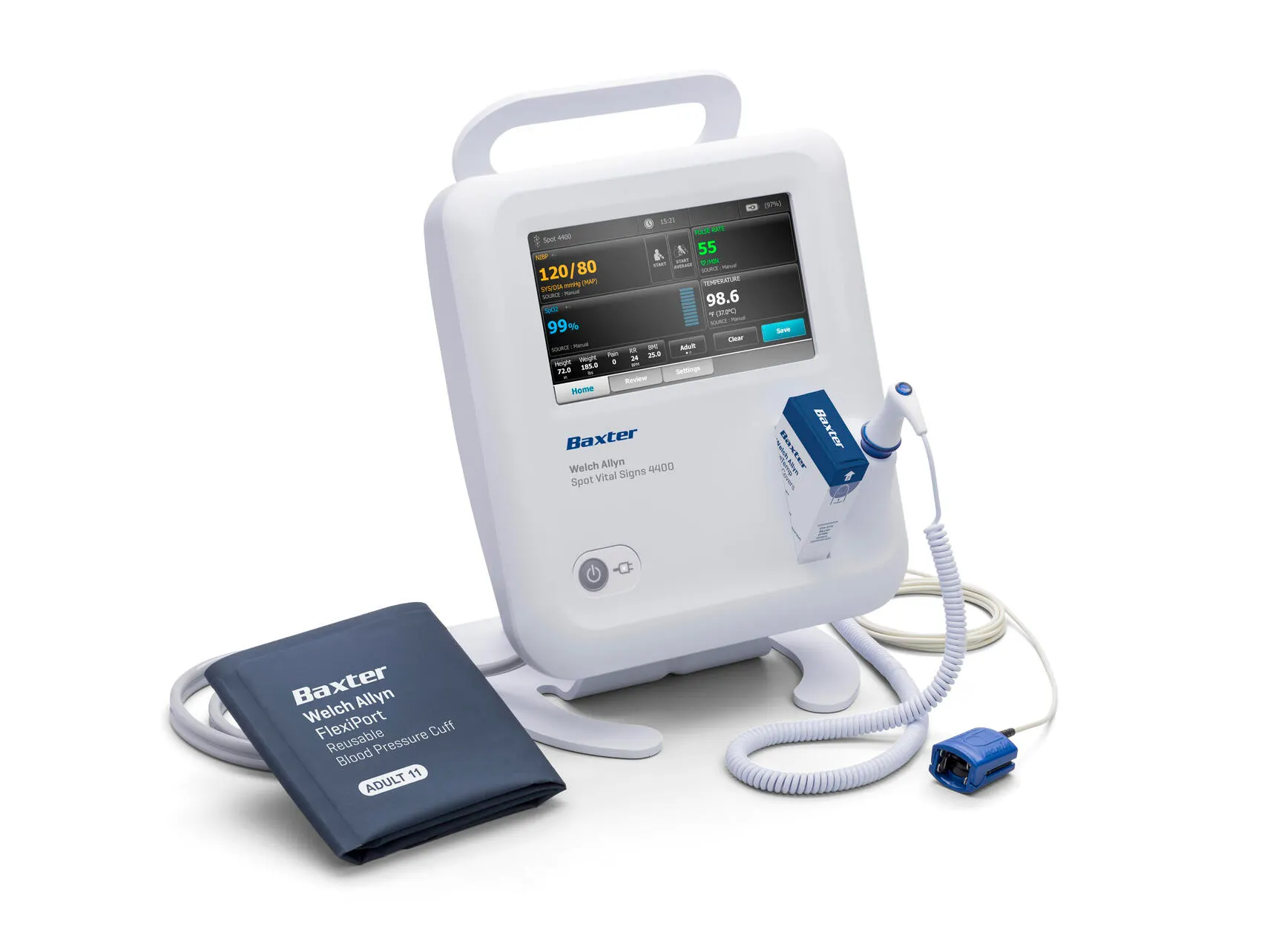
The Welch Allyn Spot Vital Signs 4400 device uses SureBP technology with blood pressure averaging. Blood pressure averaging has been shown to help ensure accurate hypertension diagnosis. This all-in-one vital signs device offers:
- SureBP blood pressure, SureTemp Plus thermometry and Nonin SpO2 technology for fast, accurate measurements
- One-touch blood pressure averaging to help reduce variability for accurate blood pressure readings
- EMR connectivity to help avoid documentation errors
Why is Diagnosing Hypertension So Difficult?
Several common challenges can make it difficult for office clinicians to follow HTN guidelines for screening and diagnosing.
Selecting an option will show the corresponding tab content below
Clinicians are challenged by time constraints.
With so many patients and so little time, clinicians must often rely on single blood pressure readings in the office. But studies show 35% of one-time readings may be artificially high.14
GUIDELINES SAY...
Average Your BP Readings
Before diagnosing, clinicians should average several readings — with rest periods in between – and repeat over 2-3 office visits.4, 15
Clinicians are challenged by their tools.
Manual readings using mercury sphygmomanometers and aneroid devices are time consuming. In fact, the extra time it takes to measure blood pressure manually can add up to more than $1,000/year.16
GUIDELINES SAY...
Automate Your BP Readings
The AHA says automated office blood pressure devices are the preferred approach for blood pressure measurement in the office.17 These devices can help make your readings accurate — and your workflows efficient.
Clinicians are challenged by their technique.
Manual measurement errors are surprisingly common. For example, did you know clinicians tend to round blood pressure readings to the nearest 5 mm Hg >50% of the time? Seemingly small factors can add up quickly — and may lead to inaccurate assessments of patients’ true blood pressures.18,19,20,21
GUIDELINES SAY...
Check Your BP Readings
The ACC and AHA have outlined 7 steps with 19 specific instructions to help ensure accurate blood pressure readings. 4,15
The problem is clear: manual, in-office readings are not sufficient to properly identify this serious condition. How can we do better?
It Matters How You Measure
Our trusted clinical parameters — including SureBP blood pressure technology and SureTemp thermometry — deliver results you can count on. And that’s important because, for accurate blood pressure readings, every millimeter counts.

Request A Blood Pressure Technique Poster Today
Technique Matters
Manual blood pressure readings are easy to get wrong. The good news? With good technique and the right tools — including the right blood pressure cuff size — you can make a difference in the accuracy of your patient readings and diagnoses.27,28
Shhh...
Talking or active listening adds 10 mm Hg.
Keep Back and Feet Supported
Unsuported back and feet add 6 mm Hg.
Choose the Right Cuff Size
Too-small cuff adds 2-10 mm HG.
Empty Bladder
Full bladder adds 10 mm Hg.
Mind the Arm
Cuff over clothing adds 5-50 mm Hg. Unsupported arm adds 10 mm Hg.
Uncross Legs
Crossed legs add 2-8 mm Hg.
Technology Matters
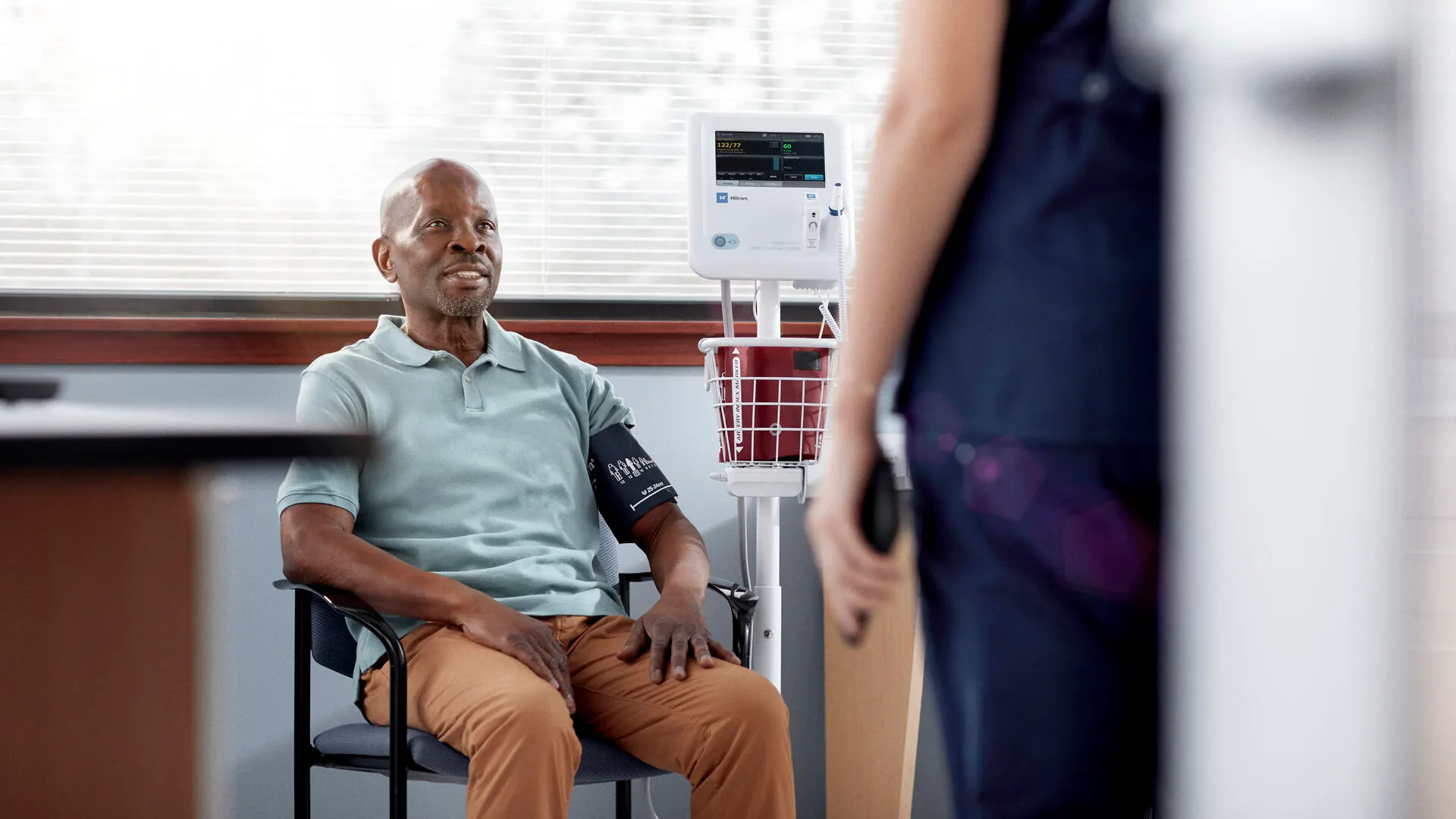
Diagnosing and managing hypertension starts with accurate BP measurements — so you need technology you can trust.
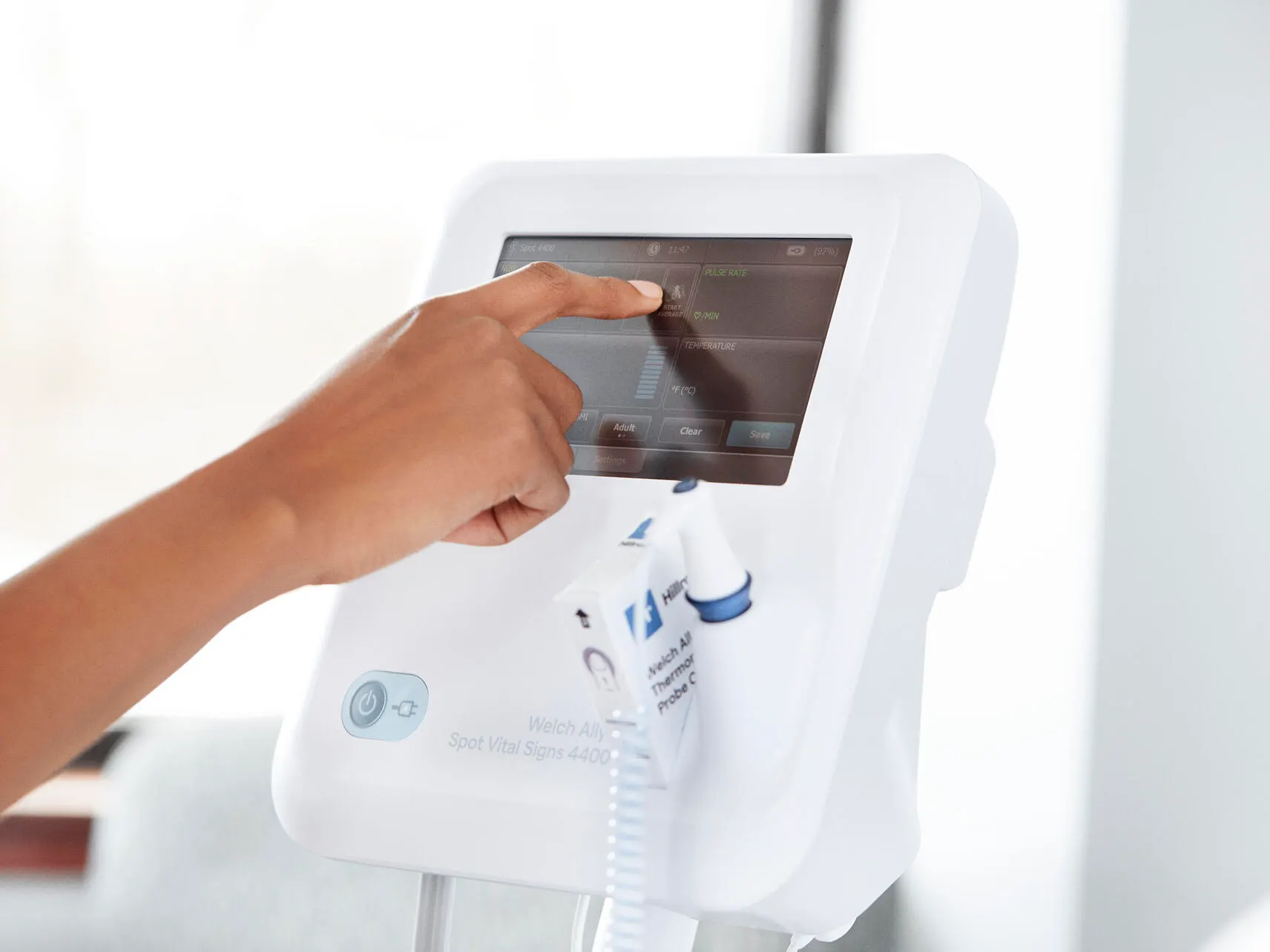
The Spot Vital Signs 4400 Device offers:
- An easy-to-use, easy-to-navigate touchscreen
- One-tap blood pressure averaging
- Reliable lithium-ion battery that lasts up to 8 hours on a single charge
Connected to Your EMR — And Your Workflow
Use it as a standalone device or connect it with many of today’s top EMR systems. The Spot Vital Signs 4400 Device makes it easy to send information directly to your patient’s chart, helping reduce manual data entry errors.
Keep Learning
Explore these resources to help your practice better diagnose and manage hypertension.
[Whitepaper] Automatic BP Devices Can Deliver Long-Term Benefits
[Infographic] Blood Pressure Measurement Technique
Best Practices in Blood Pressure Management Overview
[Whitepaper] Help Improve Hypertension Detection with BP Averaging
(Whitepaper) Rethink Your Hypertension Program
[Infographic] Types of Hypertension
Hypertension Should be Managed Everywhere
Now, You Can Meet the Challenge Where It Is
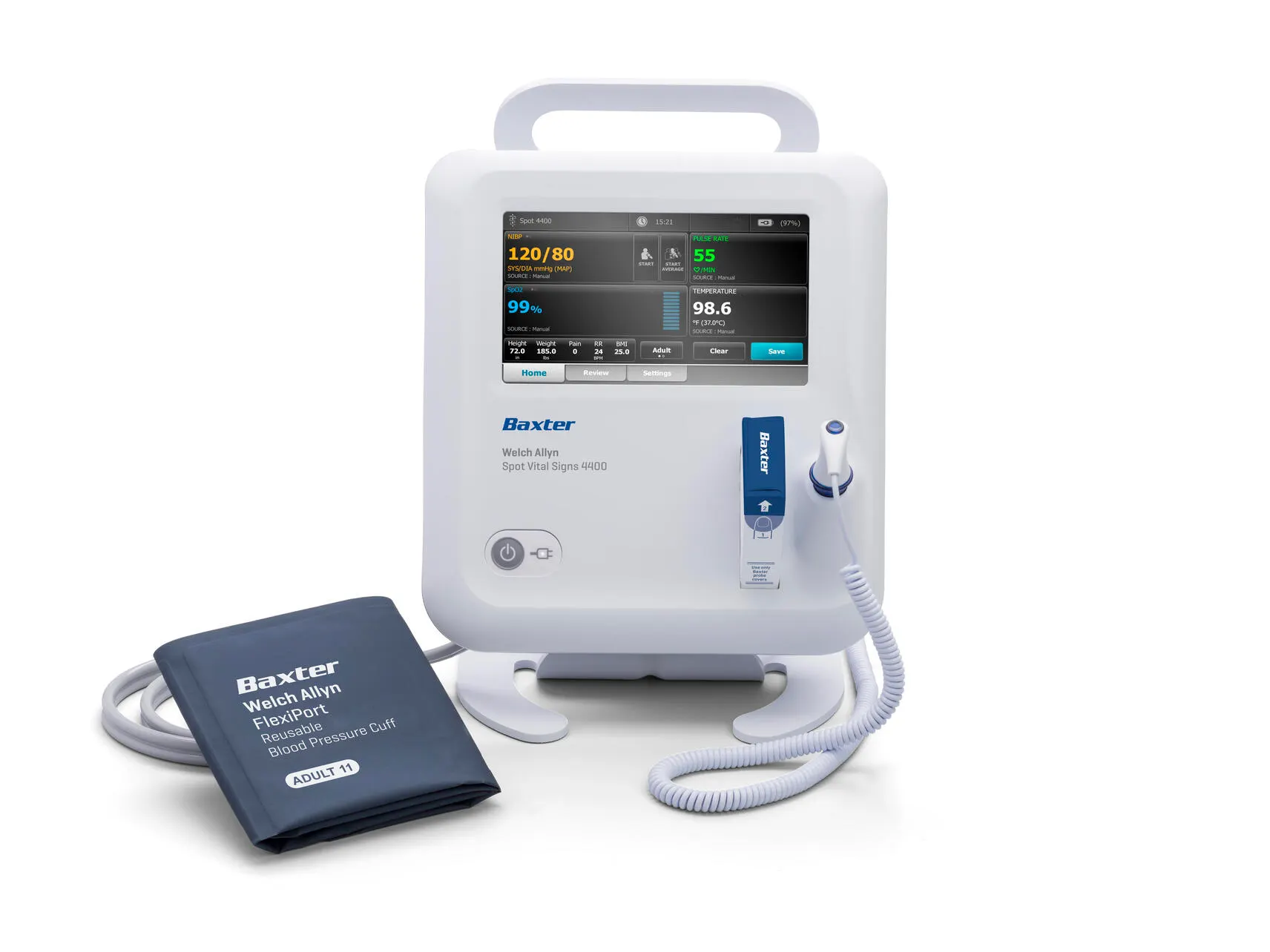
Our line of Welch Allyn digital blood pressure devices are designed to help you:


Are you up for the challenge?
We’re with you every step of the way. Contact your Baxter representative today to learn how we can help you get a handle on hypertension in your practice.
Disclaimers
Rx Only: For safe and proper use of the products mentioned herein, please refer to the Operator’s Manual or Instructions for Use.
Baxter, Welch Allyn, ProBP 2000, Spot Vital Signs, SureBP and SureTemp are trademarks of Baxter International Inc. or its subsidiaries.
References
- Mills KT, Bundy JD, Kelly TN et al. Global disparities of hypertension prevalence and control: a systematic analysis of population-based studies from 90 countries. Circulation 2016; 134(6): 441-450. DOI: 10.1161/CIRCULATIONAHA.115.018912
- NCD Risk Factor Collaboration. Worldwide trends in blood pressure from 1975-2015: a pooled analysis of 1479 population-based measurement studies with 19.1 million participants. Lancet 2017; 389: 37-55. DOI: 10.1016/S0140-6736(16)31919-5
- Virani SS, Alonso A, Benjamin EJ, et al. Heart disease and stroke statistics—2020 update. Circulation 2020; 141: e139–e596. DOI: 10.1161/CIR.0000000000000757
- Whelton PK, Carey RM, Aronow WS, et al. 2017 ACC/AHA/AAPA/ABC/ACPM/AGS/APhA/ASH/ASPC/NMA/PCA Guideline for the prevention, detection, evaluation, and management of high blood pressure in adults: a report of the American College of Cardiology/American Heart Association Task Force on Clinical Practice Guidelines. J Am Coll Cardiol 2018; 71: e127-248. DOI: 10.1016/j.jacc.2017.11.006
- Zhang D, Wang G, Zhang P, et al. Medical expenditures associated with hypertension in the US, 2000-2013. Am J Prev Med 2018; 53 (6 Suppl 2): S164-S171. DOI: 10.1016/j.amepre.2017.05.014
- Kirkland EB, Heincelman M, Bishu KG, et al. Trends in healthcare expenditures among US adults with hypertension: national estimates, 2003-2014. J Am Heart Assoc 2018; 7: e008731. DOI: 10.1161/JAHA.118.008731
- Whelton PK, Carey RM, Aronow WS, et al. 2017 ACC/AHA/AAPA/ABC/ACPM/AGS/APhA/ASH/ASPC/NMA/PCA Guideline for the prevention, detection, evaluation, and management of high blood pressure in adults: a report of the American College of Cardiology/American Heart Association Task Force on Clinical Practice Guidelines. J Am Coll Cardiol 2018; 71: e127-248. DOI: 10.1016/j.jacc.2017.11.006
- Ogedegbe G, Pickering TG, Clemow L, et al. The misdiagnosis of hypertension. Arch Intern Med 2008; 168 (22): 2459-2465.
- Verdecchia P, Angeli F, Reboldi G. Masked and white-coat hypertension. Moving to African-Americans. J Am College Cardiol 2015; 66(20): 2170-2172. DOI: 10.1016/i.jacc.2015.09.008
- Alwan H, Pruijm M, Ponte B, et al. Epidemiology of masked and white-coat hypertension: the family-based SKIPOGH study. PLoS ONE 2014; 9(3): e92522. DOI: 10.1371/journal.pone.0092522
- Gorostidi M, Vinyoles E, Banegas JR, de la Sierra A. Prevalence of white-coat and masked hypertension in national and international registries. Hypertens Res 2015; 38: 1-7. DOI: 10.1038/hr.2014.149
- Tientcheu D, Ayers C, Das SR, et al. Target organ complications and cardiovascular events associated with masked hypertension and white-coat hypertension. J Am College Cardiol 2015; 66(20): 2159-2169. DOI: 10.1016/i.jacc.2015.09.007
- Briasoulis A, Androulakis E, Palla M, et al. White-coat hypertension and cardiovascular events: a meta-analysis. J Hypertens 2016; 34: 593-599. DOI: 10.1097/HJH.0000000000000832
- Handler J, Zhao U, Egan BM. Impact of the number of blood pressure measurements on blood pressure classification in US adults: NHANES 1999-2008. J Clin Hypertens 2012; 14 (11): 751-759.
- Muntner P, Shimbo D, Carey RM, et al. Measurement of blood pressure in humans. A scientific statement from the American Heart Association. Hypertension 2019; 73: e35-e66. DOI: 10.1161/HYP.0000000000000087
- Welch Allyn. Vital Considerations: Automatic Blood Pressure Devices Can Deliver Long-Term Benefits in Primary Care. 2020.
- 1Rakotz, M. A MAP for Improving Blood Pressure Control. Last accessed: 10.25.2020
- Trilling JS, Froom J. The urgent need to improve hypertension care. Arch Fam Med 2000; 9: 794-801.
- Yarrows SA. Professors: The world is not flat. J Clin Hypertens 2010; 12(8): 568-569. DOI: 10.1111/j.1751-7176.2010.00314.
- Myers MG. The great myth of office blood pressure measurement. J Hypertens 2012; 30(10): 1894-1898.
- Staessen JA, Li Y, Hara A, et al. Blood pressure measurement Anno 2016. Am J Hypertens 2017; 30(5): 453-463. DOI: 10.1093/ajh/hpw148
- Centers for Disease Control and Prevention (CDC). Hypertension Cascade: Hypertension Prevalence, Treatment and Control Estimates Among US Adults Aged 18 Years and Older Applying the Criteria From the American College of Cardiology and American Heart Association’s 2017 Hypertension Guideline—NHANES 2013–2016. Atlanta, GA: US Department of Health and Human Services; 2019
- Briasoulis A, Androulakis E, Palla M, et al. White-coat hypertension and cardiovascular events: a meta-analysis. J Hypertens 2016; 34: 593-599. DOI: 10.1097/HJH.0000000000000832
- AHA Hospital Statistics, 2020 ed. American Hospital Association. Last Accessed: March 09, 2021.
- Axon RN, Cousineau L, Egan BM. Prevalence and management of hypertension in the inpatient setting: a systematic review. Journal of Hospital Medicine 2011; 6(7): 417-422.
- Rastogi R, Sheehan MM, Shaker V, et al. Treatment and outcomes of inpatient hypertension among adults with noncardiac admissions. JAMA Intern Med 2021; 181(3): 345-352. DOI: 10.1001/jamainternmed.2020.7501
- Pickering. et al. Recommendations for Blood Pressure Measurement in Humans and Experimental Animals Part 1: Blood Pressure Measurement in Humans. Circulation. 2005;111: 697-716.
- Handler J. The importance of accurate blood pressure measurement. The Permanente Journal/Summer 2009/Volume 13 No. 3 51
Collapsed