


RetinaVue Care Delivery Model
Helping to save vision for patients living with diabetes in primary care.

Help Improve HEDIS, STAR Ratings and HCC Risk Factors by Closing Care Gaps
Intercepting patients during routine primary care office visits with a teleretinal program like the RetinaVue care delivery model can help providers achieve up to 90% documented compliance with diabetic retinal exams in just 12 months.1
That means potential financial incentives from quality programs — and more importantly, the opportunity to help save more patients’ vision. Learn more in our eBook, The Solution is in Sight, The Complete Guide to a Successful Teleretinal Program.
90%
Documented compliance with diabetic retinal exams in just 12 months.1
Help Save Vision for Patients Living with Diabetes in Primary Care
Diabetic Retinopathy is the leading cause of blindness in working-age adults.

95%
of vision loss due to diabetic retinopathy can be prevented with early detection.
RetinaVue Care Delivery Model
Help preserve the vision of your patients living with diabetes with a simple eye exam that takes minutes to complete for diabetic retinopathy detection during routine primary care visits. Baxter delivers the three keys to a successful teleretinal program:

Secure Software Network

Nationwide Services and Support
See the RetinaVue 700 Imager in Action
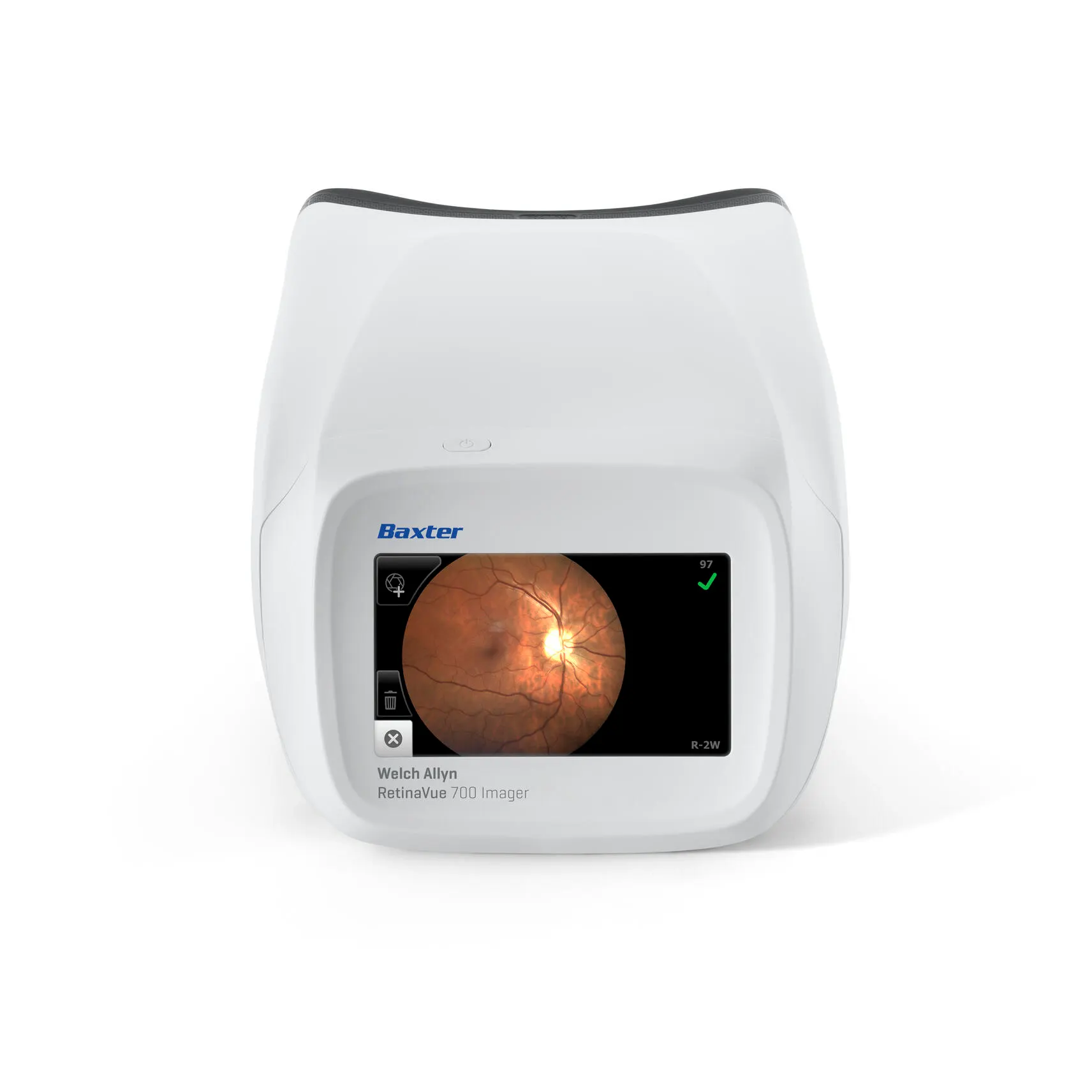
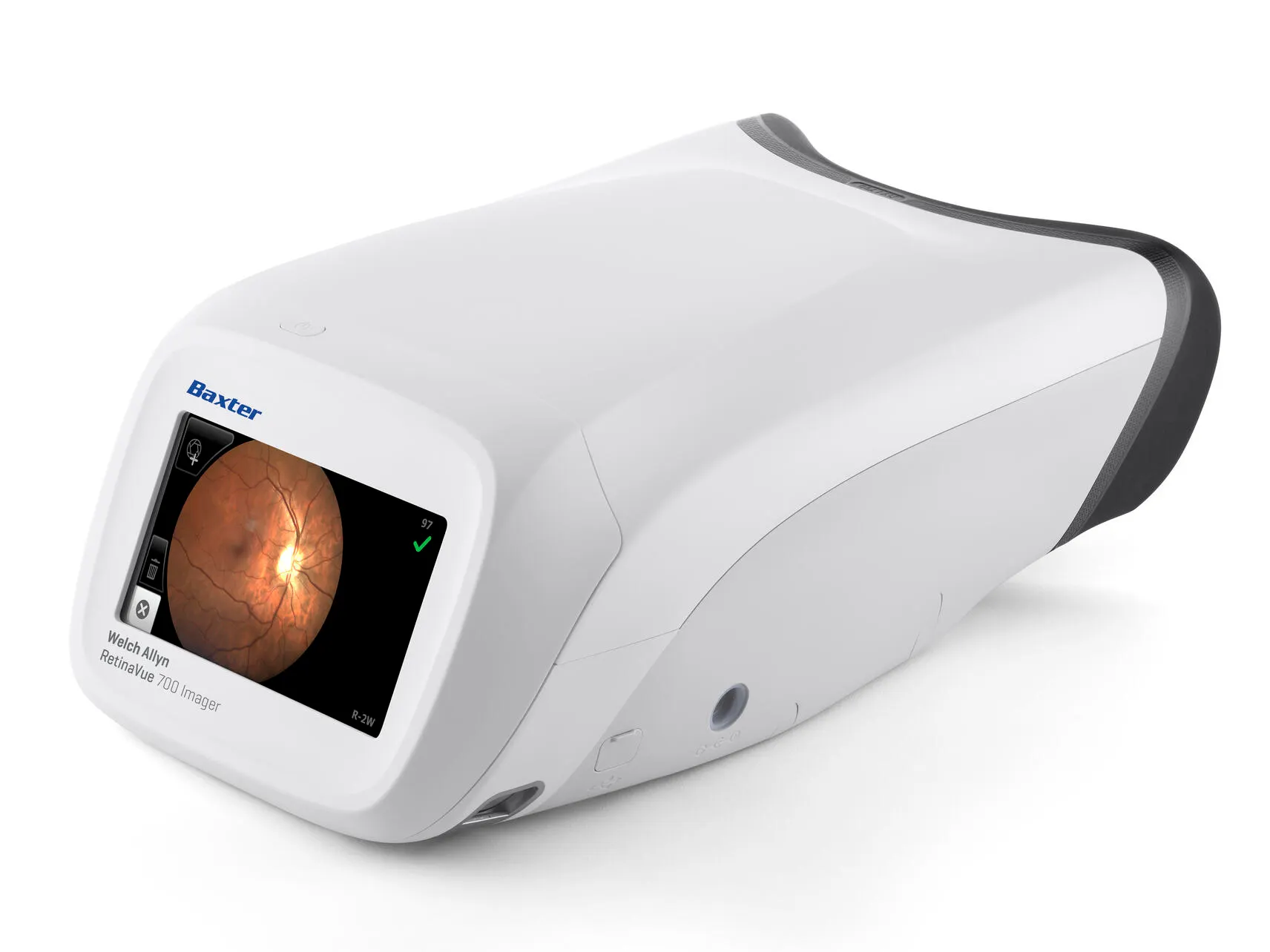
The most advanced handheld retinal camera* in patient-centered retinal imaging technology made for primary care.
EMR Connected Workflow

Order
Exams in your EMR

Acquire
Images with Simple and Affordable Retinal Cameras

Transfer
Images Securely with HIPAA - compliant SOC-2 and HITRUST R2 Certified Software

Results
Diabetic Retinopathy Evaluation from Remote Ophthalmologists Returned in One Business Day
60%
60% of diabetic patients or less comply with annual retinal exams2
80%
80% of patients will eventually develop some stage of diabetic retinopathy3
90%
Achieve up to 90% diabetic retinal exam compliance in 12 months1
Help Improve Outcomes
- Accurately document chronic conditions such as diabetes and its complications to help inform care planning, appropriate coverage and quality performance
- Improve total cost of care with early detection and treatment

…By allowing this test to be covered in my office and other primary care settings, we are making access to recommended annual diabetic eye exams more convenient for patients and thereby saving patients’ vision.
Not only is this technology unquestionably effective, it is relatively straightforward to incorporate into the regular diabetic office visit and presents an ideal opportunity to discuss eye health with the patient. We have expanded the program from one clinic to all four of our clinics in the last few months.
Dr. Robert Berke
See the Proof
Case Studies and White Papers


Request a Virtual Demo
Request a demo of the RetinaVue care delivery model by completing the form.
Disclaimers
*Comparison of specifications of commercially available handheld retinal cameras for the primary care market in the US as of September 17, 2024.
Rx Only: For safe and proper use of the products mentioned herein, please refer to the appropriate Operator’s Manual or Instructions for Use.
Baxter, Hillrom, Welch Allyn, and RetinaVue are trademarks of Baxter International Inc. or its subsidiaries. US-FLC63-260004Any other trademarks, product names or brand images appearing herein are the property of their respective owners.
References:
- Mansberger SL, Gleitsmann K, Gardiner S, et al. Comparing the effectiveness of telemedicine and traditional surveillance in providing diabetic retinopathy screening examinations: A randomized controlled trial. Telemed J E Health. 2013 Dec; 19(12): 942-8.
- Diabetic Retinopathy Preferred Practice Pattern® from the American Academy of Ophthalmology, http://dx.doi.org/10.1016/j.ophtha.2019.09.025, ISSN 0161-6420/1
- Diabetic Retinopathy Preferred Practice Pattern® from the American Academy of Ophthalmology, http://dx.doi.org/10.1016/j.ophtha.2019.09.025, ISSN 0161-6420/19
Collapsed