

In the face of growing demand for healthcare, you’re tasked with the quadruple aim of improving patient experiences, clinician experiences, and business outcomes while lowering overall costs. With the constant evolution of how services are delivered, you need healthcare technology that helps you achieve these goals. With early detection, 95% of vision loss caused by diabetic retinopathy can be prevented, but patient compliance with annual retinal exams is about 60%.1 Patients often find it difficult to obtain an annual diabetic retinal exam for several reasons: lack of insurance or healthcare access, limited knowledge of the risk, or cultural and language barriers.
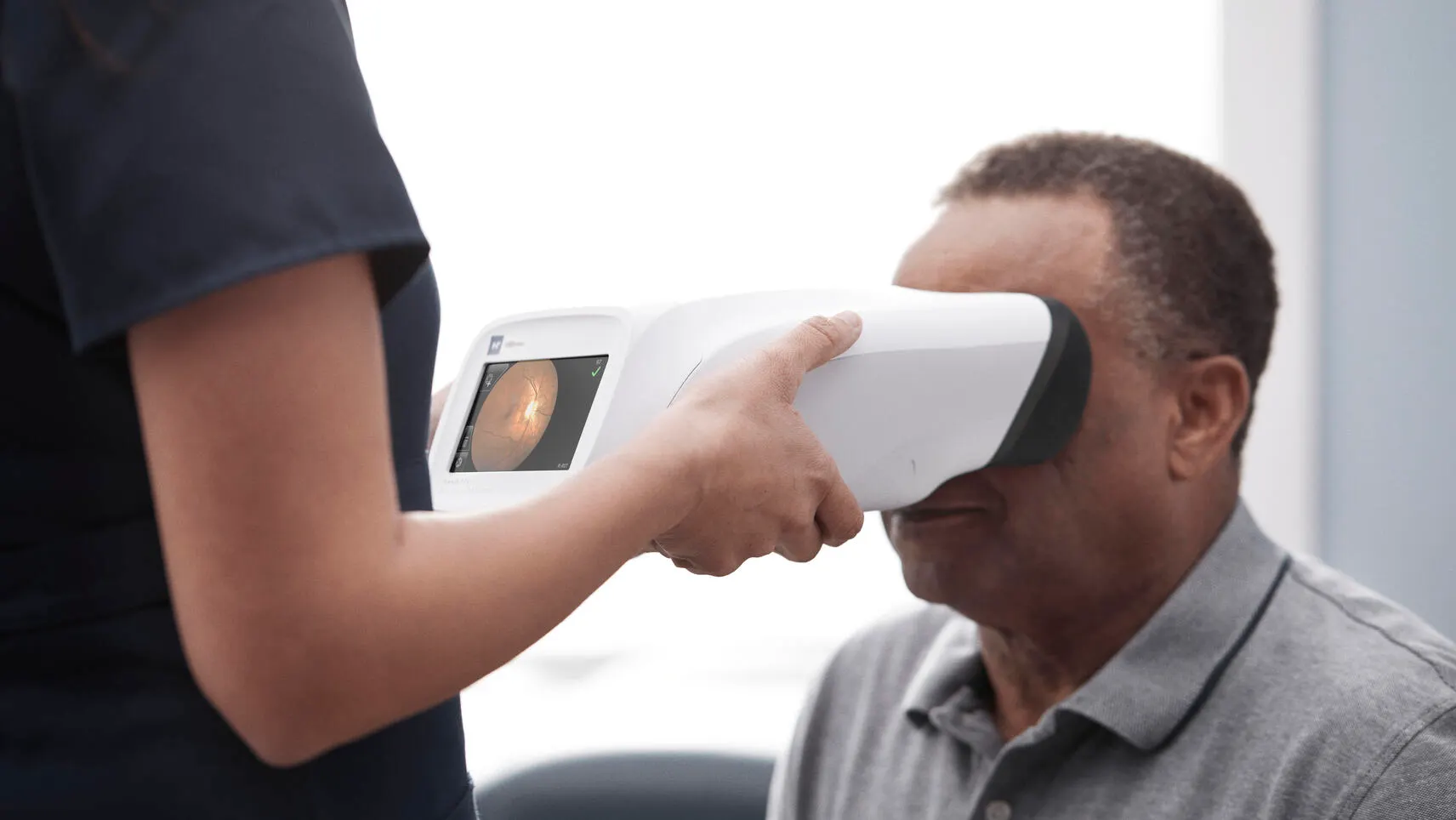
Implementing a diabetic retinopathy solution for primary care such as the Welch Allyn RetinaVue care delivery model can help healthcare providers increase patient access to diabetic retinal exams in primary healthcare settings to help improve patient outcomes and lower population healthcare costs.
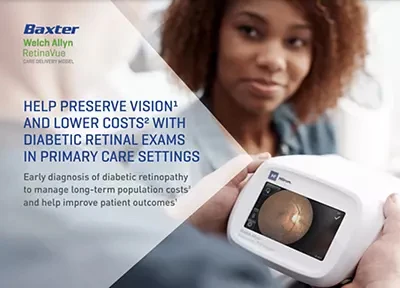
Check out the eBook below, "Help Preserve Vision and Lower Costs with Diabetic Retinal Exams in Primary Care Settings," to learn more about how timely and easier-to-access diabetic retinal exams in the primary healthcare setting help preserve vision.
What's inside the eBook:
- Expanding primary care services with diabetic retinal exams
- Once complications such as diabetic retinopathy develop, the average cost of care triples2
- As of January 1, 2021, Medicare covers with CPT® Code 92228 for the RetinaVue care delivery model
Rx Only. For safe and proper use of the products mentioned herein, please refer to the appropriate Operator’s Manual or Instructions for Use.
Baxter, RetinaVue and Welch Allyn are trademarks of Baxter International Inc. or its subsidiaries.
References
- Diabetic Retinopathy Preferred Practice Pattern from the American Academy of Ophthalmology, http://dx.doi.org/10.1016/j.ophtha.2019.09.025, ISSN 0161-6420/19.
- Vojta D, De Sa J, Prospect T, Stevens S. “Effective Interventions for Stemming the Growing Crisis of Diabetes and Prediabetes: A National Payer’s Perspective.” Health Aff (Millwood). 2012; 31: 20–26.