

What Are the Top 10 Advanced Medical Practices?
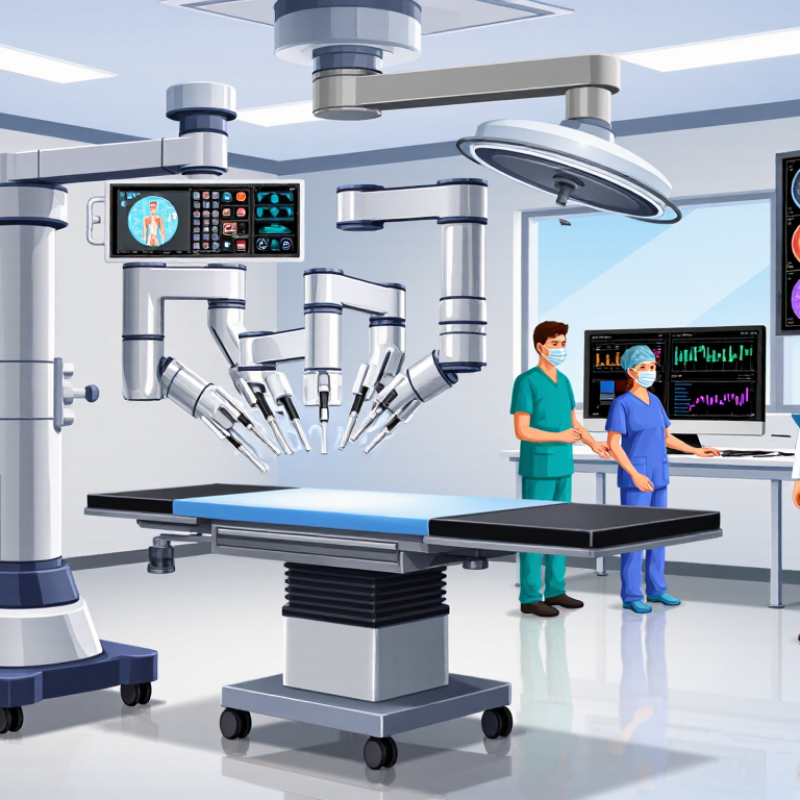
Advanced medical practices are no longer distant laboratory concepts. They appear in operating rooms, imaging centers, and ordinary clinics. Robotic surgery can translate a surgeon’s hand movement into smaller, steadier motions. Artificial intelligence can flag a suspicious shadow before a radiologist finishes reading a scan. Precision medicine can match treatment choices with a patient’s genetic profile.
The Stanford AI Index 2024 reported 223 FDA-authorized AI-enabled medical devices in 2023, compared with only six in 2015. That change signals momentum, not automatic success. The World Health Organization’s Global Strategy on Digital Health 2020–2025 also emphasizes interoperable systems, patient safety, and equitable access. These conditions matter. A brilliant device remains limited when a rural clinic lacks broadband, training, or maintenance support.
Dr. Eric Topol, a cardiologist and digital-medicine researcher, described the future as “the partnership between human and artificial intelligence” in his book Deep Medicine. His point deserves careful attention. Advanced medical practices should strengthen clinical judgment, not quietly replace it. Human oversight still matters.
This guide examines ten leading approaches, including robotic procedures, genomics, remote monitoring, regenerative medicine, and AI-supported diagnosis. Each practice offers practical benefits, measurable risks, and unresolved questions. Some claims remain early. Some systems perform unevenly across populations. That uncomfortable gap deserves honesty.
The best innovation is not always the newest machine. It is the method that improves outcomes, protects dignity, and works reliably at the bedside.
Defining Advanced Medical Practices and Their Clinical Role
What Are the Top 10 Advanced Medical Practices?
Defining Advanced Medical Practices and Their Clinical Role
Advanced medical practices are not defined by expensive equipment alone. They combine evidence, specialist training, precise diagnosis, and safer patient care. The leading ten include robotic-assisted surgery, precision medicine, artificial intelligence-supported imaging, minimally invasive procedures, telemedicine, remote monitoring, 3D-printed implants, regenerative medicine, advanced radiation therapy, and intensive life-support technologies.
Their clinical role is practical. Precision medicine can match treatment choices with genetic or molecular findings. Remote monitoring can identify worsening heart failure before an emergency visit. AI may highlight subtle imaging patterns, but clinicians must verify every result. The World Health Organization reports that noncommunicable diseases cause about 74% of global deaths. Better early detection therefore has a substantial clinical value.
Evidence remains uneven.
The OECD’s Health at a Glance 2023 reports that health spending averaged 9.2% of GDP across OECD countries in 2022. Investment alone does not guarantee better outcomes. Advanced care also requires trained teams, clear consent, reliable data protection, and long-term follow-up. The WHO Global Strategy on Digital Health 2020–2025 stresses interoperability and equitable access, yet rural patients may still lack stable connectivity. This is where the definition becomes uncomfortable: a highly advanced procedure can fail when communication, recovery support, or affordability is neglected. Some technologies are promising, but not every promising result is ready for routine care.
What Are the Top 10 Advanced Medical Practices? - Defining Advanced Medical Practices and Their Clinical Role
| Rank | Advanced Medical Practice | Definition | Primary Clinical Role | Common Applications | Clinical Maturity | Key Benefits | Important Limitations |
|---|---|---|---|---|---|---|---|
| 1 | Precision Medicine | Tailoring prevention, diagnosis, and treatment to a patient’s genetic, clinical, environmental, and lifestyle characteristics. | To select treatments and prevention strategies that are more likely to benefit an individual patient. | Cancer treatment selection, inherited disease assessment, cardiovascular risk management, and individualized prevention. | Established and expanding | Improved treatment matching, reduced avoidable exposure, and more informed risk assessment. | Evidence and access vary by disease; genetic findings may be uncertain or difficult to interpret. |
| 2 | Artificial Intelligence-Assisted Diagnostics | Use of validated algorithms to analyze medical images, signals, laboratory results, or clinical records to support professional judgment. | To help clinicians identify patterns, prioritize cases, and detect selected abnormalities more consistently. | Image interpretation, pathology support, electrocardiogram analysis, risk prediction, and clinical documentation assistance. | Rapidly developing | May improve workflow efficiency, consistency, and early detection when appropriately validated. | Risk of bias, false results, limited generalizability, and overreliance without clinician oversight. |
| 3 | Minimally Invasive and Robotic-Assisted Surgery | Surgical procedures performed through small incisions using specialized instruments, enhanced visualization, and, in some cases, robotic interfaces. | To provide precise operative treatment while limiting tissue disruption when clinically appropriate. | Urologic, gynecologic, thoracic, gastrointestinal, and selected general surgical procedures. | Established for selected procedures | Smaller incisions, reduced blood loss in some procedures, and potentially shorter recovery. | Requires specialized training and infrastructure; not appropriate for every operation or patient. |
| 4 | Image-Guided Interventional Procedures | Use of real-time imaging to guide needles, catheters, energy, or other instruments to a targeted anatomical location. | To diagnose or treat disease with targeted access and less invasive approaches than open surgery. | Biopsies, vascular procedures, tumor ablation, drainage, embolization, and image-guided pain interventions. | Established | Accurate targeting, smaller access sites, and reduced recovery time for suitable cases. | Radiation exposure may occur; complications and effectiveness depend on anatomy, disease, and operator expertise. |
| 5 | Advanced Radiation Therapy | Highly planned delivery of ionizing radiation designed to concentrate dose in a target while limiting exposure to nearby healthy tissue. | To control or eradicate selected tumors with anatomically precise treatment plans. | Stereotactic treatment, image-guided radiotherapy, intensity-modulated therapy, and selected particle-based treatments. | Established for defined indications | Precise tumor targeting and improved protection of surrounding structures compared with less conformal techniques. | Toxicity remains possible; treatment suitability depends on tumor location, size, biology, and prior therapy. |
| 6 | Cell and Gene Therapies | Treatments that modify genetic material or use living cells to replace, repair, regulate, or enhance biological functions. | To address selected diseases at a cellular or molecular level rather than only treating symptoms. | Certain inherited disorders, blood cancers, immune deficiencies, and selected tissue-repair applications. | Established for narrow indications; expanding | Potential for durable responses and disease modification after a limited treatment course. | High cost and manufacturing complexity; immune reactions, serious adverse effects, and long-term uncertainty may occur. |
| 7 | Remote Patient Monitoring and Virtual Care | Delivery of clinical assessment, follow-up, and selected physiological monitoring through secure digital communication and connected devices. | To extend care beyond clinical facilities and identify changes that may require timely intervention. | Chronic disease management, post-discharge follow-up, behavioral health, and monitoring of vital signs. | Established for selected services | Improved access, earlier escalation of concerning changes, and fewer unnecessary in-person visits. | Technology access, data quality, privacy, reimbursement, and inability to perform a complete physical examination can limit care. |
| 8 | Three-Dimensional Printing and Patient-Specific Devices | Creation of anatomical models, surgical guides, prostheses, or implants using digital imaging and additive manufacturing. | To support procedural planning, education, reconstruction, and customized device design. | Orthopedic reconstruction, craniofacial surgery, dental care, surgical simulation, and prosthetic development. | Established in selected uses; evolving | Improved visualization, procedure planning, fit customization, and patient-specific education. | Production standards, material safety, regulatory requirements, and limited comparative outcome evidence may apply. |
| 9 | Regenerative and Tissue-Engineering Medicine | Approaches intended to repair, replace, or restore damaged cells, tissues, or biological functions using cells, scaffolds, biologic materials, or combinations. | To promote tissue repair or functional restoration where conventional treatment may be insufficient. | Skin repair, cartilage research, bone reconstruction, ocular surface treatment, and laboratory-developed tissue models. | Mixed; many applications remain investigational | May restore structure or function and could reduce dependence on donor tissue in selected settings. | Variable evidence, uncertain durability, manufacturing challenges, and risks from unproven interventions. |
| 10 | Pharmacogenomics | Use of inherited genetic information to help predict how a person may metabolize or respond to particular medicines. | To support medication selection, dosing, and adverse-reaction risk assessment for drugs with clinically relevant genetic associations. | Selected cardiovascular, psychiatric, infectious-disease, pain-management, and oncology treatments. | Established for selected gene–drug pairs | May reduce preventable adverse reactions and improve the likelihood of appropriate medication dosing. | Genetics is only one factor affecting response; testing is not informative for every medicine or clinical situation. |
Note: “Top” reflects clinical impact, technological sophistication, and current medical relevance rather than a universal evidence-based ranking. Suitability and outcomes depend on the individual patient, clinical indication, available expertise, and applicable guidelines.
Related Posts
-

How to Improve Healthcare Services With Better Procurement?
-
2026 Best Digital Healthcare Transformation Solutions?
-

Top 10 Integrated Healthcare Solutions for Global Buyers
-
China Top Medical Innovation Trends for Global Buyers?
-

10 Tips for Choosing Modern Healthcare Solutions?
-

China Best Hospital Care Solutions for Global Buyers