
China Top 10 Advanced Medical Practices for Global Buyers

China’s healthcare sector is developing advanced medical practices across oncology, cardiology, orthopedics, fertility care, rehabilitation, and minimally invasive surgery. For global buyers, these capabilities may offer shorter treatment pathways, specialized equipment, and experienced clinical teams. Yet advanced technology alone does not guarantee safe or suitable care. Provider credentials, hospital accreditation, clinical outcomes, infection-control records, and aftercare capacity require careful review.

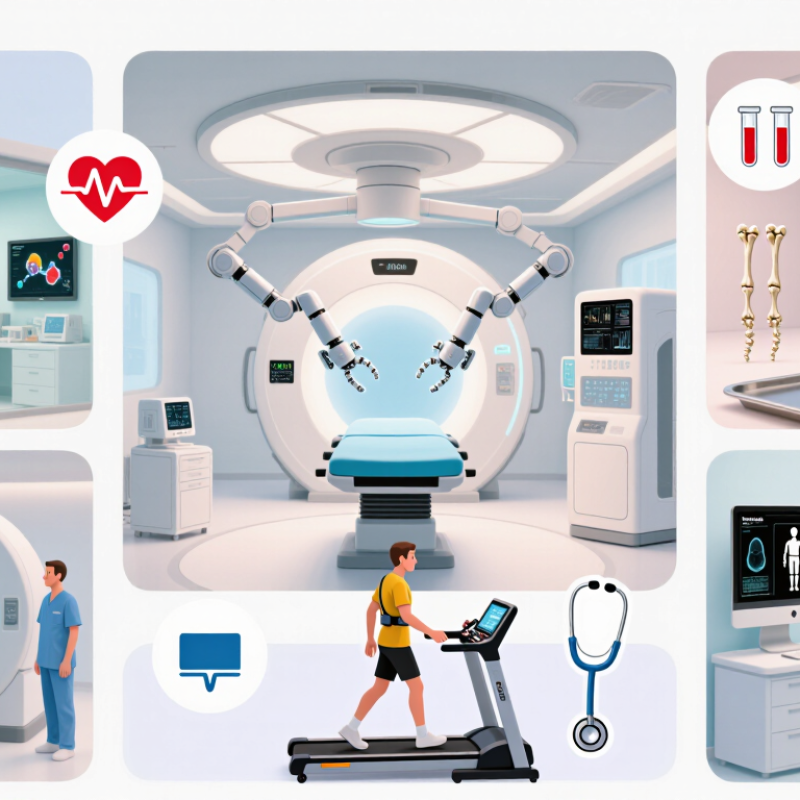
This guide introduces ten medical practices that deserve attention from international procurement teams, healthcare partners, and informed patients. Examples include robotic-assisted surgery, proton therapy, precision diagnostics, 3D-printed implants, and digital hospital platforms. The details matter: a robotic operating room, a pathology laboratory using molecular testing, or a rehabilitation unit measuring mobility through wearable sensors. Buyers should request clear evidence, including device certifications, physician qualifications, maintenance plans, treatment protocols, and transparent pricing.

Local expertise matters.

China’s medical institutions vary widely in resources and international experience. Some hospitals publish peer-reviewed research and maintain formal partnerships with overseas organizations. Others may present impressive equipment without sufficient outcome data. That difference deserves attention. This overview does not replace independent medical advice, regulatory assessment, or direct hospital verification. It offers a practical starting point for comparing providers responsibly, especially when language, insurance, data protection, and cross-border follow-up create additional risks. Reliable decisions depend on evidence, communication, and realistic expectations.
China Top 10 Advanced Medical Practices for Global Buyers

Medical Practice Standards and Global Buyer Considerations in China

China’s advanced medical practices cover robotic surgery, minimally invasive procedures, precision imaging, telemedicine, cell therapy research, and digital hospital systems. Other strong areas include interventional oncology, rehabilitation technology, clinical laboratory testing, and emergency care. Global buyers should evaluate more than equipment features. They should examine clinical protocols, practitioner training, maintenance records, and measurable patient outcomes. A modern facility may look impressive, yet inconsistent documentation can weaken confidence.

Tips:

Request recent validation reports. Check operator qualifications. Confirm product traceability. Review sterilization procedures. Ask how clinical data is protected. Compare service response times. A site visit often reveals practical details missing from brochures.

Reliable purchasing also requires regulatory review in both China and the destination market. Buyers should confirm registration pathways, import documentation, language support, warranty terms, and post-market monitoring. Independent audits can test whether written standards match daily practice. Ask for anonymized case evidence, not only success stories.

Some suppliers provide excellent technology but limited international support. That gap deserves attention. Standards can also vary between hospitals, regions, and specialties, so a national reputation is not enough.

Buyers should build a staged evaluation, beginning with document checks and controlled clinical discussions. My own assessment would remain cautious when outcome data is incomplete. That caution is useful.

China’s Top Advanced Medical Practices by Specialty and Technology

China’s advanced medical practices are increasingly specialty-led, not technology-led alone. Oncology centers combine digital pathology, molecular testing, image-guided radiotherapy, and multidisciplinary review. Cardiology teams use catheter-based intervention and continuous monitoring. Orthopedic departments apply navigation-assisted joint surgery. Ophthalmology relies on high-precision microsurgery and optical imaging. These services differ by hospital tier and region. A device may perform superbly in a tertiary center, then struggle elsewhere.

The National Health Commission reported 38,355 hospitals and more than one million medical institutions in 2023. This network creates diverse procurement pathways for global buyers. The National Healthcare Security Administration reported basic medical insurance enrollment above 1.3 billion people in 2024. Scale is significant. Yet coverage does not guarantee equal clinical capability. Buyers should examine procedure volume, staffing, maintenance response, and training records. WHO’s Global Health Expenditure Database placed China’s health expenditure near 5.4% of GDP in 2021, below many high-income systems.

Strong opportunities include imaging, minimally invasive intervention, rehabilitation, and hospital informatics. AI-assisted imaging may shorten reading queues, but local validation remains necessary. Digital platforms require interoperability, cybersecurity, and strict data governance. A polished demonstration is not clinical proof. Evidence quality remains uneven across specialties. Buyers should request peer-reviewed outcomes, adverse-event records, calibration logs, regulatory documentation, and total ownership costs before contracting. Some reports highlight market growth while overlooking failed deployments. That gap deserves careful scrutiny.

Clinical Expertise, Treatment Processes, and Hospital Capabilities

China Top 10 Advanced Medical Practices for Global Buyers

China’s advanced medical sector covers robotic-assisted surgery, proton therapy, precision oncology, CAR-T therapy, TAVR, complex endoscopy, fertility care, neurosurgery, organ transplantation, and regenerative medicine. These practices depend on more than modern equipment. Experienced multidisciplinary teams review imaging, laboratory results, surgical risks, and recovery needs before treatment. Many leading hospitals use tumor boards and structured clinical pathways. Patients may receive digital records, interpreter support, and scheduled follow-up consultations. Hospital capability also matters. Check intensive care capacity, infection-control procedures, emergency response, and rehabilitation services.

Treatment usually begins with remote document review, followed by an in-person assessment. Physicians then explain diagnosis, alternatives, expected timelines, and possible complications. Surgery may involve advanced imaging and robotic assistance, while oncology care often combines pathology, molecular testing, and targeted treatment planning. Results can vary between hospitals and patients. No pathway is perfect. Some evidence is still developing, especially for newer therapies. Reliable providers should discuss uncertainty instead of promising guaranteed outcomes.

Tips: Request physician credentials, hospital accreditation, recent outcome data, and a written treatment plan. Confirm total costs, translation arrangements, visa timing, and post-treatment monitoring. Ask who manages complications after returning home. Bring original scans and pathology reports. Keep copies. Independent medical review is wise before making a major decision.

Quality Assurance, Accreditation, and Patient Safety Requirements

For global buyers assessing China’s top advanced medical practices, accreditation should be checked before equipment or price. The WHO Global Patient Safety Report 2024 states that one in ten patients experiences harm during care. More than half of this harm is preventable. Buyers should request current accreditation records, external audit findings, and corrective-action evidence. A polished certificate is not enough.

Reliable hospitals use traceable sterilization logs, barcode medication checks, and documented emergency drills. ISO 15189 principles support competence in medical laboratories, including staff training, equipment calibration, and quality-control records. The OECD Health at a Glance 2023 report also shows that patient-safety indicators vary widely between health systems. Local performance therefore needs direct verification. Ask to observe a sample collection room, not only a presentation room.

Small details reveal maturity. Is the patient identity checked twice? Are temperature alarms reviewed each morning? Can staff explain what happened after a near miss? These questions matter. WHO recommends learning from errors without creating a blame culture. Yet implementation can be uneven, especially across rapidly expanding facilities. That weakness deserves honest attention. Global buyers should compare infection rates, readmission data, complaint handling, and audit results over time. Independent interpretation may still be necessary.

China Top 10 Advanced Medical Practices for Global Buyers

Quality assurance, accreditation, and patient safety requirements

The chart presents a non-provider-specific buyer-screening model. The percentages represent relative procurement importance across core quality, accreditation, and patient-safety controls. Global buyers should verify each practice through current regulatory documents, accreditation evidence, audit records, and facility-level performance data.

How Global Buyers Can Evaluate Providers and Arrange Medical Services

China Top 10 Advanced Medical Practices for Global Buyers

Global buyers should evaluate more than advanced equipment. Ask whether the provider performs robotic surgery, proton therapy, cellular treatment, complex imaging, or minimally invasive procedures routinely. Request the physician’s credentials, procedure volume, complication rates, and recent peer-reviewed evidence.

A polished website is not proof.

Check independent accreditation and the facility’s infection-control records. Confirm who will make clinical decisions and who will provide follow-up care after you return home.

Ask for a written treatment plan, including alternatives, expected recovery, medication needs, and possible complications. No provider is perfect. Reported outcomes may also reflect a different patient population.

Arrange a video consultation before booking travel. Send translated medical records securely, then verify the interpretation with the treating team.

Request an itemized estimate covering consultation, tests, surgery, hospital days, medicines, accommodation, and emergency care. Prices can change when additional findings appear.

That risk should be explained clearly.

Ask whether the provider can coordinate airport transport, local accommodation, interpreters, and medical escorts without pressuring you. Confirm visa requirements through official government sources.

Keep copies of consent forms, invoices, imaging files, and discharge instructions. A trusted coordinator should answer in writing and identify the responsible clinician.

Do not rush. Take another medical opinion when the recommendation feels unusually certain.