

What Are the Top Medical Innovation Trends in 2026?
What will shape medicine in 2026: a striking new device, or quieter changes in how care is delivered? The medical innovation trends gaining attention include clinical AI, remote patient monitoring, precision therapies, and more connected health records. Their promise is practical: a clinician may review a flagged scan sooner, while a patient’s home readings help guide follow-up. Yet a promising tool is not automatically a better treatment.
Clinical AI may help organize records, identify patterns, or support image review, but qualified clinicians must remain responsible for decisions. Remote monitoring can bring measurements from a blood pressure cuff or glucose sensor into care planning. It also raises questions about data quality, access, and who responds when readings look concerning. Precision medicine may better match treatments to individual biology, though cost and uneven evidence can limit its reach. No single trend fits every patient.
This is where careful evaluation matters. Health systems should look for published evidence, meaningful patient outcomes, privacy safeguards, and clear plans for human oversight. They should also ask whether a tool works in ordinary clinics, not only in carefully controlled trials. Adoption will vary. Some useful technologies may disappoint; others may take years to prove their value. The landscape is promising, but not settled. A grounded look at these developments can help readers distinguish measurable progress from confident headlines—and notice where important questions remain unanswered.
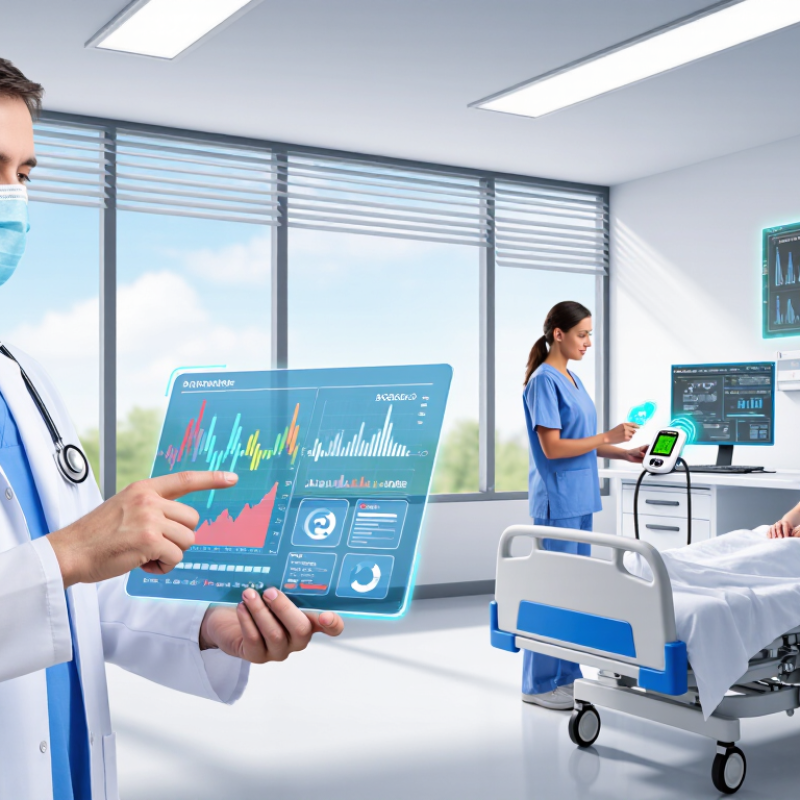
Defining Medical Innovation and Its 2026 Context
Medical innovation is not simply a new device or a clever algorithm. It is a change that helps people receive safer, more effective, or more accessible care. Novelty is not enough. A useful innovation must fit clinical work, protect patient information, and show measurable value beyond a laboratory or pilot study. For example, a remote monitoring system matters only if its alerts reach a care team that can respond.
In 2026, innovation sits within a health system balancing digital tools, aging populations, limited staff, and rising costs. Artificial intelligence, connected sensors, and precision diagnostics may support earlier decisions, but their performance can vary across patient groups and settings. A promising model in a large hospital may struggle in a rural clinic with weaker connectivity. That detail matters.
The context is practical as much as technical. Clinicians need clear explanations, manageable workflows, and evidence that a tool improves outcomes without adding hidden burdens. Patients need understandable consent and a real choice where possible. Evaluation should examine safety, accessibility, cost, and long-term effects—not just speed or accuracy. Some benefits may take years to prove. That uncertainty deserves attention, not a polished launch story. Medical innovation in 2026 is therefore best judged by what changes in everyday care, for whom, and at what cost.
What Are the Top Medical Innovation Trends in 2026? - Defining Medical Innovation and Its 2026 Context
| Innovation trend | What it means in 2026 | Verified data point | Potential healthcare impact | Key implementation consideration |
|---|---|---|---|---|
| AI-enabled clinical tools | Clinical decision support, image analysis, documentation, and workflow tools are moving from pilots toward carefully evaluated use in routine care. | The U.S. Food and Drug Administration maintains a public list of authorized AI-enabled medical devices; radiology is the largest specialty category on the list. | May help clinicians prioritize cases, interpret medical images, and reduce administrative workload. | Validate performance across patient groups and settings; maintain human oversight, privacy safeguards, and post-deployment monitoring. |
| Precision medicine and genomics | Care is increasingly matched to a patient’s molecular or genetic profile, particularly in cancer diagnosis and treatment selection. | An estimated 20 million new cancer cases occurred worldwide in 2022. Global annual cases are projected to reach 35 million by 2050. | Biomarker-guided testing can help identify treatment options for relevant patient groups and support more individualized care. | Access to testing, result interpretation, genetic counseling, and representation in genomic research remain important challenges. |
| Cell and gene therapies | One-time or limited-course treatments that modify cells or genetic material are expanding for selected serious diseases. | In December 2023, the FDA approved the first therapy using CRISPR-based gene editing, for eligible patients with sickle cell disease. | These therapies may address an underlying disease mechanism rather than only managing symptoms. | High treatment and care-delivery costs, long-term safety follow-up, specialist capacity, and equitable access require attention. |
| Telehealth and remote patient monitoring | Virtual consultations and connected devices can extend care beyond clinics, especially for follow-up and ongoing condition management. | In 2021, 37% of U.S. adults reported using telemedicine during the previous 12 months, according to the National Center for Health Statistics. | Can make some follow-up care more convenient and provide clinicians with health measurements collected between visits. | Digital access, data quality, reimbursement, clinical escalation pathways, and patient privacy affect safe and effective use. |
| Age-friendly and home-based care | Health systems are adapting services for older populations, including coordinated care, rehabilitation, and support at home. | The World Health Organization projects that 1 in 6 people globally will be aged 60 or older by 2030; the population in this age group is projected to reach 2.1 billion by 2050. | Integrated services can support independence and help align care with patients’ needs across home, community, and clinical settings. | Care coordination, accessible design, caregiver support, and adequate staffing are essential to implementation. |
| Digital health workforce support | Automation and digital tools are increasingly being considered to support—not replace—health professionals and improve care coordination. | The WHO has projected a global shortfall of 10 million health workers by 2030, primarily in low- and lower-middle-income countries. | Well-designed tools may reduce repetitive tasks and help teams allocate limited clinical capacity to patient care. | Measure whether tools genuinely reduce workload; provide training and avoid adding complex systems that increase administrative burden. |
Sources: U.S. Food and Drug Administration: AI-Enabled Medical Devices; International Agency for Research on Cancer: Global Cancer Burden; U.S. Food and Drug Administration: Sickle Cell Disease Gene Therapies; National Center for Health Statistics: Telemedicine Use; World Health Organization: Ageing and Health; World Health Organization: Health Workforce. Projections and adoption figures are dated estimates, not guaranteed outcomes for 2026.
Related Posts
-
China Top Medical Innovation Trends for Global Buyers?
-
What Are the Top 10 Advanced Medical Practices?
-

Why Healthcare Industry Trends Matter to Global Buyers?
-
China Best Healthcare Industry Trends for Global Buyers?
-

China Best Hospital Care Solutions for Global Buyers
-
China Top 10 Advanced Medical Practices for Global Buyers